

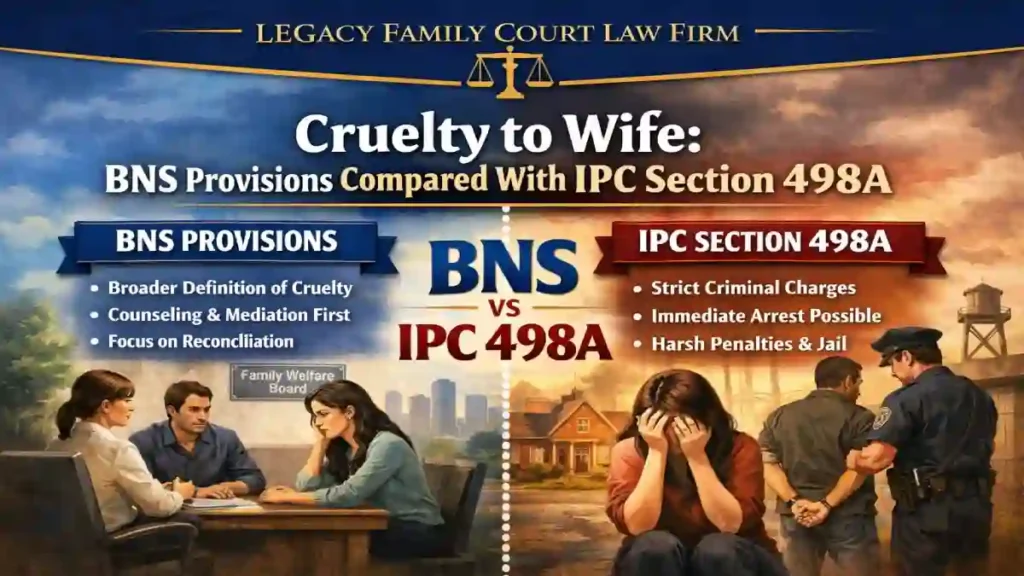
Cruelty to Wife – India introduced Section 498A IPC to protect married women from cruelty and dowry harassment. However, the Bharatiya Nyaya Sanhita modernized several criminal law provisions during 2023 reforms. Legacy Family Court Law Firm regularly advises families regarding matrimonial cruelty complaints and criminal defense matters. BNS provisions now operate alongside BNSS procedural safeguards and BSA evidentiary standards nationwide. Consequently, police stations, Mahila Courts, and Family Courts follow updated procedural compliance frameworks carefully. Cruelty includes physical violence, emotional abuse, dowry pressure, intimidation, and unlawful financial demands. Moreover, victims may seek protection orders, maintenance, residence rights, and criminal prosecution simultaneously. Women frequently approach All Women Police Stations for immediate legal protection and counseling assistance. Courts also consider electronic evidence, chats, emails, and medical records during matrimonial cruelty proceedings. Therefore, parties should preserve documentary proof supporting allegations or defenses during litigation stages. Legal remedies exist before Magistrate Courts, Sessions Courts, High Courts, and Family Courts across India. Timely legal guidance significantly reduces procedural mistakes and emotional stress during matrimonial disputes.
Cruelty to Wife: BNS Provisions Compared With IPC Section 498A – Legacy Family Court Law Firm
| Legal Provision | Governing Law | Primary Purpose |
|---|---|---|
| Section 498A | IPC | Cruelty protection |
| Relevant BNS Provision | BNS 2023 | Updated criminal framework |
| BNSS | Procedural law | Investigation procedures |
| BSA | Evidence law | Digital evidence rules |
Meaning of Cruelty Against Married Women
Cruelty includes intentional conduct causing grave mental trauma, bodily harm, or suicidal tendencies within marriage. Additionally, unlawful dowry demands frequently trigger criminal complaints against husbands and relatives nationwide. Courts examine repeated harassment patterns, threats, humiliation, and financial coercion during matrimonial proceedings. Consequently, isolated disagreements usually fail to satisfy criminal cruelty requirements before competent courts. Emotional abuse through social isolation, verbal attacks, and intimidation may constitute actionable cruelty. Furthermore, continuous interference from in-laws often aggravates matrimonial disputes and domestic violence allegations. Women may file complaints before local police stations, Women Commissions, and Protection Officers immediately. Magistrate Courts can issue protection orders under domestic violence legislation alongside criminal proceedings. Therefore, complainants should maintain medical records, messages, photographs, and witness details carefully. Defense lawyers frequently challenge exaggerated allegations, false implications, and delayed complaints before criminal courts. High Courts also exercise inherent jurisdiction under BNSS provisions during quashing proceedings. Strong legal representation helps parties navigate arrest risks, mediation efforts, and evidentiary challenges effectively.
- Physical assault within marriage.
- Continuous dowry harassment.
- Emotional intimidation and threats.
- Financial coercion against wife.
- Abusive conduct causing mental trauma.
Key Differences Between IPC Section 498A and BNS Framework
The Bharatiya Nyaya Sanhita reorganized criminal statutes while retaining protections for married women substantially. However, procedural mechanisms changed significantly under Bharatiya Nagarik Suraksha Sanhita implementation nationwide. Police officers now follow updated arrest guidelines and investigation procedures during matrimonial cruelty cases. Consequently, accused persons frequently seek anticipatory bail before Sessions Courts and High Courts. Courts also encourage mediation and reconciliation where circumstances permit lawful settlement opportunities. Moreover, BSA provisions strengthen admissibility standards for electronic communications and digital evidence. WhatsApp chats, bank transfers, emails, and audio recordings often influence matrimonial cruelty litigation outcomes. Women may simultaneously pursue divorce, maintenance, child custody, and residence remedies before Family Courts. Therefore, coordinated legal strategy becomes essential during parallel civil and criminal proceedings. Authorities carefully scrutinize false complaints and malicious prosecution allegations against estranged spouses presently. Legacy Family Court Law Firm represents complainants and respondents before courts across Tamil Nadu and India. Effective documentation improves credibility and strengthens litigation strategy during contested matrimonial disputes.
| Comparison Point | IPC Framework | BNS Framework |
|---|---|---|
| Criminal Structure | Traditional code | Reorganized framework |
| Evidence Rules | Evidence Act | Bharatiya Sakshya Adhiniyam |
| Procedure | CrPC | BNSS |
| Digital Evidence | Limited reliance | Stronger recognition |
Legal Remedies and Criminal Procedure in Cruelty Cases
Police Complaints and Criminal Investigation Process
Women facing cruelty may lodge complaints before jurisdictional police stations or All Women Police Stations. Subsequently, police officers record statements and commence investigations under BNSS procedural safeguards carefully. Authorities frequently summon husbands, relatives, and witnesses during preliminary inquiry stages nationwide. Moreover, investigating officers collect medical reports, digital communications, and financial transaction records diligently. Courts discourage mechanical arrests because matrimonial disputes often involve complex emotional circumstances. Consequently, accused persons commonly seek anticipatory bail before Sessions Courts under BNSS provisions. Judges examine complaint gravity, supporting evidence, and settlement possibilities before granting protective relief. Women may also approach State Women Commissions and Legal Services Authorities for immediate support. Therefore, complainants should disclose accurate facts and preserve evidence supporting allegations consistently. False complaints sometimes attract counter-litigation involving defamation, malicious prosecution, and custody disputes. High Courts intervene during illegal arrests, procedural violations, and abuse of criminal process allegations. Experienced matrimonial lawyers help parties manage investigations, counseling sessions, and mediation proceedings effectively.
Domestic Violence Proceedings and Family Court Remedies
Domestic violence remedies operate independently from criminal cruelty prosecution under matrimonial legal frameworks nationwide. Aggrieved women may seek residence rights, maintenance, protection orders, and compensation before Magistrate Courts. Additionally, Family Courts adjudicate divorce petitions, custody matters, and spousal maintenance disputes simultaneously. Courts regularly coordinate overlapping proceedings involving criminal complaints and matrimonial litigation strategically. Consequently, parties require comprehensive legal advice addressing criminal exposure and family law consequences together. Protection Officers assist complainants regarding shelter homes, counseling services, and emergency support mechanisms. Moreover, interim maintenance applications often arise during ongoing cruelty and domestic violence proceedings. Courts evaluate income disclosures, living standards, and dependent responsibilities while deciding maintenance claims. Therefore, litigants should maintain salary records, expenditure statements, and financial disclosures accurately. Mediation centers attached to Family Courts frequently encourage negotiated settlements during matrimonial conflicts. However, courts reject coercive compromises involving serious violence or continued threats against complainants. Legacy Family Court Law Firm handles domestic violence litigation, mediation, and appellate proceedings comprehensively.
| Available Remedy | Competent Forum |
|---|---|
| Protection Order | Magistrate Court |
| Divorce Petition | Family Court |
| Maintenance Claim | Family Court |
| Anticipatory Bail | Sessions Court |
Arrest, Bail, and BNSS Safeguards in Matrimonial Cases
BNSS introduced procedural safeguards balancing complainant protection and accused rights during matrimonial investigations nationwide. Police officers now follow structured arrest protocols before detaining husbands and family members unnecessarily. Consequently, courts scrutinize investigation conduct and procedural compliance during anticipatory bail hearings carefully. Judges frequently direct mediation efforts where allegations indicate possibility of lawful matrimonial reconciliation. Moreover, older parents and distant relatives often seek quashing relief before High Courts promptly. Courts examine complaint specificity, documentary proof, and witness statements during criminal proceedings thoroughly. Therefore, complainants should avoid generalized allegations lacking factual particulars against accused relatives. Accused persons may challenge unlawful detention, property seizure, and coercive police conduct through constitutional remedies. BNS provisions continue penal consequences for cruelty causing physical injury or severe mental harassment. Additionally, courts consider children’s welfare during bail conditions and interim settlement negotiations carefully. Legal strategy should balance criminal defense, matrimonial relief, and reputational protection simultaneously. Timely legal intervention often prevents unnecessary arrests and prolonged litigation exposure.
Role of Electronic Evidence Under Bharatiya Sakshya Adhiniyam
Digital evidence now plays a decisive role during cruelty prosecution and matrimonial litigation proceedings nationwide. Courts increasingly rely upon WhatsApp chats, emails, photographs, recordings, and social media communications regularly. Bharatiya Sakshya Adhiniyam modernized admissibility principles governing electronic records and digital documentation substantially. Consequently, parties should preserve original devices and avoid deleting relevant communications during disputes. Lawyers frequently obtain call records, transaction details, and forensic reports supporting matrimonial allegations effectively. Moreover, manipulated evidence may weaken credibility and trigger adverse judicial observations during trial proceedings. Courts evaluate authenticity, timestamps, metadata, and contextual circumstances before accepting digital evidence formally. Therefore, litigants should consult cyber forensic professionals where electronic evidence becomes materially significant. Police cybercrime units also assist investigations involving threatening messages and digital harassment allegations. High Courts regularly examine evidentiary irregularities during revision petitions and quashing applications nationwide. Legacy Family Court Law Firm advises clients regarding electronic evidence preservation and courtroom admissibility requirements. Proper documentation strengthens credibility and improves litigation outcomes during contested matrimonial proceedings.
- Preserve original electronic devices safely.
- Avoid deleting messages or recordings.
- Maintain certified digital evidence copies.
- Collect bank transaction statements promptly.
- Secure medical and counseling records.
False Cases, Misuse Allegations, and Legal Defense
Courts acknowledge misuse allegations in certain matrimonial cruelty complaints involving exaggerated accusations occasionally. Consequently, judicial authorities emphasize balanced investigation and evidence-based prosecution during matrimonial disputes nationwide. Accused persons frequently challenge omnibus allegations against relatives residing separately from complainants permanently. Moreover, High Courts quash proceedings lacking specific overt acts or supporting documentary evidence. Defense lawyers often present travel records, medical reports, and communication history disproving allegations strategically. Courts also encourage mediation where matrimonial discord appears capable of lawful reconciliation efforts. Therefore, complainants should file truthful complaints supported by contemporaneous evidence and credible witness accounts. False allegations may trigger counter-cases involving defamation, perjury, and malicious prosecution claims eventually. BNSS safeguards protect accused persons against arbitrary arrest and prolonged custodial harassment effectively. Additionally, Family Courts consider litigation conduct while deciding custody and matrimonial relief applications. Legacy Family Court Law Firm provides criminal defense, anticipatory bail, and appellate litigation services comprehensively. Early legal consultation helps parties protect rights and avoid procedural complications during disputes.
| Defense Strategy | Legal Benefit |
|---|---|
| Anticipatory Bail | Protection from arrest |
| Quashing Petition | Case dismissal |
| Mediation Process | Settlement opportunity |
| Documentary Evidence | Stronger defense |
Matrimonial Litigation Before Family Courts and High Courts
Family Courts handle divorce, restitution, maintenance, and custody proceedings arising from matrimonial cruelty allegations nationwide. Simultaneously, criminal courts adjudicate prosecution initiated under BNS cruelty provisions and domestic violence legislation. Consequently, litigants require coordinated litigation strategy addressing parallel proceedings before different judicial forums carefully. Courts encourage mediation because prolonged matrimonial litigation severely affects children and family relationships emotionally. Moreover, judges examine financial disclosures, employment details, and educational expenses during interim maintenance hearings. Women may seek permanent alimony, child support, and exclusive residence rights through Family Court proceedings. Therefore, husbands should maintain transparent financial records and comply with interim judicial directions consistently. Non-compliance may invite attachment proceedings, contempt actions, and adverse judicial observations eventually. High Courts supervise subordinate courts through revision, appeal, and constitutional jurisdiction mechanisms regularly. Lawyers frequently challenge maintenance orders, custody rulings, and procedural irregularities before appellate courts. Legacy Family Court Law Firm represents clients before Family Courts, Sessions Courts, and High Courts effectively. Strategic case management reduces emotional distress and improves prospects for favorable judicial outcomes.
Mediation, Settlement, and Reconciliation Mechanisms
Indian matrimonial jurisprudence increasingly promotes mediation and negotiated settlement during family disputes nationwide. Courts regularly refer parties to mediation centers attached with District Courts and Family Courts. Consequently, many couples resolve maintenance, custody, and criminal litigation issues through structured negotiations successfully. Mediators facilitate confidential discussions addressing emotional grievances, financial disputes, and parenting responsibilities carefully. Moreover, lawful settlements may support quashing petitions before High Courts in appropriate circumstances. Courts prioritize voluntary agreements safeguarding dignity, child welfare, and long-term family stability effectively. Therefore, parties should approach mediation honestly and avoid coercive bargaining tactics during negotiations. Lawyers assist clients regarding settlement terms, consent conditions, and future legal implications comprehensively. Women may negotiate compensation, residence arrangements, and withdrawal conditions during mediated settlements strategically. Additionally, husbands often seek protection against repetitive litigation and defamatory public allegations during negotiations. Legacy Family Court Law Firm provides mediation representation, settlement drafting, and quashing petition services professionally. Constructive mediation frequently reduces litigation costs and emotional trauma for separated families.
Jurisdiction, Courts, and Government Authorities Handling Cruelty Cases
Several authorities handle matrimonial cruelty complaints under criminal and family law frameworks across India presently. Jurisdiction usually depends upon matrimonial residence, incident location, or complainant’s present residential circumstances. Consequently, women may approach nearby police stations, Mahila Courts, or Family Courts for immediate relief. State Women Commissions and Legal Services Authorities also provide counseling and legal assistance services nationwide. Moreover, Protection Officers coordinate domestic violence proceedings involving shelter homes and emergency protection measures. Sessions Courts hear anticipatory bail applications and criminal appeals arising from matrimonial prosecutions regularly. High Courts exercise constitutional powers during quashing proceedings, transfer petitions, and procedural challenges effectively. Therefore, litigants should identify proper jurisdiction before initiating criminal or matrimonial proceedings carefully. Lawyers assist clients regarding territorial jurisdiction, forum selection, and procedural compliance strategically. Courts increasingly adopt hybrid hearings and digital filing mechanisms improving accessibility for litigants significantly. Legacy Family Court Law Firm handles cross-jurisdiction matrimonial litigation and criminal defense matters comprehensively. Timely jurisdictional advice prevents procedural delays and unnecessary litigation complications substantially.
- Family Courts handle divorce disputes.
- Magistrate Courts issue protection orders.
- Sessions Courts hear bail applications.
- High Courts hear quashing petitions.
- Women Commissions provide support services.
Preventive Legal Guidance and Long-Term Protection Strategies
Preventive legal planning helps families minimize escalation of matrimonial conflicts into criminal litigation significantly nationwide. Couples should maintain respectful communication, transparent financial dealings, and documented family arrangements consistently. Moreover, early counseling and mediation often resolve misunderstandings before legal disputes intensify uncontrollably. Women facing abuse should preserve evidence and seek immediate legal consultation from experienced advocates promptly. Consequently, timely intervention frequently prevents severe violence, unlawful detention, and financial exploitation within marriages. Families should also understand legal implications surrounding dowry demands, harassment, and emotional abuse carefully. Employers, educational institutions, and resident welfare associations increasingly support victims through counseling initiatives presently. Therefore, awareness regarding BNS, BNSS, and BSA provisions remains crucial for marital legal protection. Courts consistently prioritize dignity, fairness, and child welfare during matrimonial and criminal proceedings nationwide. Legacy Family Court Law Firm offers legal consultations, emergency representation, and long-term litigation strategy services comprehensively. Strong legal support empowers litigants during emotionally challenging matrimonial disputes and criminal proceedings.
| Preventive Measure | Legal Advantage |
|---|---|
| Early mediation | Reduced litigation |
| Evidence preservation | Stronger legal case |
| Timely legal advice | Better procedural protection |
| Counseling support | Emotional stability |
FAQs on Cruelty to Wife Under BNS and IPC Section 498A
What constitutes cruelty against a wife under criminal law?
Cruelty includes physical abuse, dowry harassment, emotional intimidation, financial coercion, and conduct causing severe mental trauma.
Can a wife file domestic violence and cruelty cases together?
Yes. Women may pursue criminal cruelty complaints and domestic violence remedies simultaneously before competent judicial forums.
Which courts handle matrimonial cruelty proceedings?
Police stations, Magistrate Courts, Family Courts, Sessions Courts, and High Courts handle matrimonial cruelty proceedings nationwide.
Can accused relatives seek anticipatory bail in cruelty cases?
Yes. Accused persons may seek anticipatory bail under BNSS provisions before Sessions Courts or High Courts.
Is electronic evidence valid in matrimonial cruelty disputes?
Yes. Courts accept chats, emails, recordings, and digital evidence under Bharatiya Sakshya Adhiniyam provisions.
Can High Courts quash false matrimonial cruelty cases?
Yes. High Courts may quash proceedings lacking specific allegations or credible supporting evidence against accused persons.
Read More
- Matrimonial Offences Under BNS vs IPC – Complete Comparative Analysis
- Monetary Relief Without Evidence – Grounds for Appeal Explained
- Residence Orders Under DV Act – Scope of Appellate Interference
- Domestic Violence Proceedings After BNS & BNSS – What Has Changed?
- Misuse of Matrimonial Laws: High Court Powers Under BNSS
- National Commission for Women (NCW)