

Marriage Dissolution Guidance – Marriage is a sacred bond built on love, trust, and companionship. But sometimes, despite sincere efforts, relationships reach a point where continuing together becomes painful or impossible. When couples face such emotional and legal challenges, guidance under the Indian Divorce Act becomes essential.
At Legacy Family Court Law Firm: Chennai Divorce Experts, we understand that divorce is not just a legal process—it is a life-changing journey. Our team of compassionate and experienced divorce lawyers in Chennai offers clear, step-by-step guidance to help individuals navigate this difficult phase with dignity, fairness, and confidence.
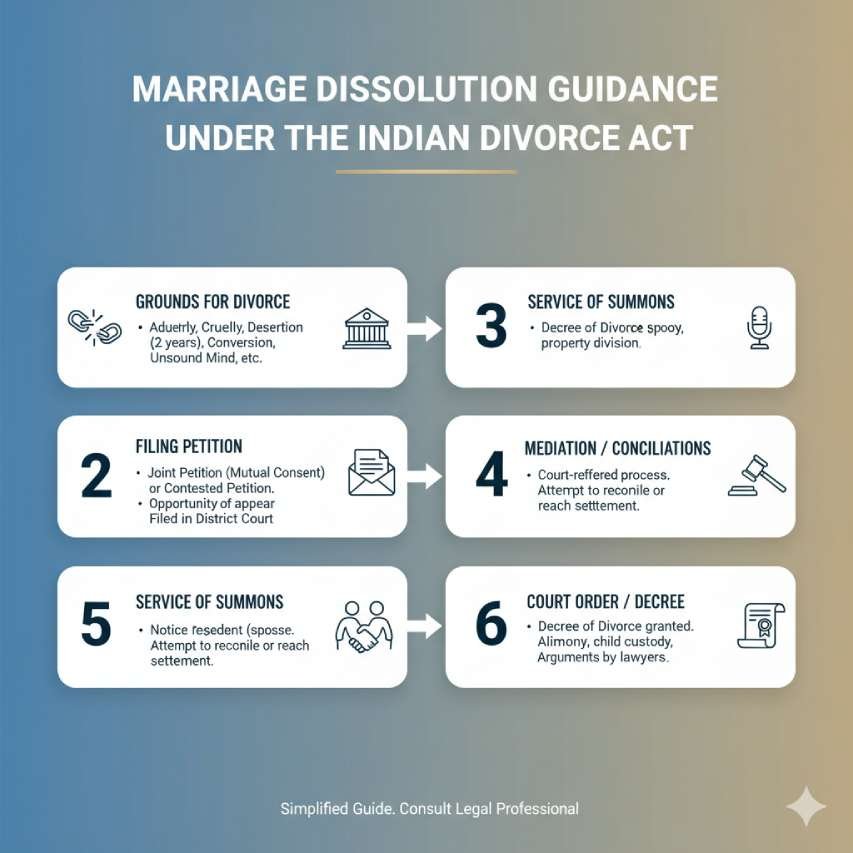
Marriage Dissolution Guidance Under the Indian Divorce Act: Legacy Family Court Law Firm
The Indian Divorce Act: A Brief Overview
The Indian Divorce Act, 1869, primarily governs the dissolution of marriage among Christians in India. It lays down the grounds, procedures, and rights associated with divorce, judicial separation, alimony, and custody.
Though the Act is specific to Christian marriages, its spirit of justice and fairness reflects the broader Indian legal system’s approach to marital disputes. Over the years, various amendments have modernized the Act to reflect changing social and family dynamics, giving equal rights to both spouses in seeking divorce.
At Legacy Family Court Law Firm, our expert lawyers specialize in explaining the Act in simple language, ensuring that clients understand every legal term, right, and responsibility before taking any major decision.
Grounds for Divorce Under the Indian Divorce Act
The law recognizes that marriages can break down for different reasons. Therefore, the Indian Divorce Act provides multiple grounds for seeking divorce, ensuring both people can file based on specific circumstances.
Some of the major grounds include:
- Adultery – When one spouse has voluntary sexual relations with someone else.
- Cruelty – When one partner causes physical or mental pain, making it impossible to live together.
- Desertion – When a spouse leaves the other for at least two years without reasonable cause.
- Conversion – When one partner converts to another religion, ending shared faith in marriage.
- Unsoundness of Mind – When one spouse suffers from mental illness that makes marital life unbearable.
- Imprisonment – When a spouse is sentenced to at least seven years in prison.
- Presumption of Death – When a spouse has not been heard from for seven years or more.
For women, the Act provides additional protection—allowing divorce on grounds such as incestuous adultery, bigamy with adultery, or rape by the husband.
At Legacy Family Court Law Firm, we carefully assess each client’s situation to determine which ground best supports their case. We ensure that the chosen ground is backed by evidence, fairness, and legal clarity.
Mutual Consent Divorce: A Peaceful Way Forward
Not all divorces involve conflict or blame. In many cases, couples mutually decide that parting ways peacefully is the best option. The Indian Divorce Act (Amendment of 2001) introduced mutual consent divorce, simplifying the process for couples who agree to end the marriage respectfully.
Here’s how it works:
- Both spouses must agree to divorce.
- They should have lived separately for at least two years.
- They must jointly file a petition in the Family Court.
- After a six-month waiting period, the court confirms the decision if both still agree.
This method saves time, reduces emotional pain, and avoids unnecessary courtroom battles. At Legacy Family Court Law Firm, our divorce experts guide couples through the paperwork, negotiations, and hearings—ensuring that the process remains smooth, private, and legally sound.
Role of the Family Court in Divorce Cases
Every divorce petition under the Indian Divorce Act must go through the Family Court. These courts focus on resolving marital disputes with sensitivity and respect.
The process usually involves:
- Filing the Petition: The divorce petition is filed by one or both spouses stating the grounds.
- Serving the Notice: The court sends a notice to the other spouse to appear.
- Counseling or Mediation: The court may suggest reconciliation or mediation to help save the marriage.
- Recording Evidence: Both sides present their statements, documents, and witnesses.
- Judgment: After hearing both parties, the court grants or denies the decree of divorce.
Our team at Legacy Family Court Law Firm ensures that clients are well-prepared for every stage. We handle the documentation, evidence, and presentation, allowing our clients to focus on emotional healing while we focus on justice.
Legal Rights and Responsibilities After Divorce
Divorce not only ends a marriage but also brings several legal consequences. Understanding these rights is vital for both partners.
1. Alimony or Maintenance
The court may direct one spouse (usually the earning partner) to pay maintenance to the other. This can be a one-time payment or a monthly allowance, depending on financial status and needs.
2. Custody of Children
The court always prioritizes the welfare of children. Custody may be given to one parent, but both parents usually retain visitation rights.
3. Division of Property
In most cases, property acquired during marriage is divided fairly. At Legacy Family Court Law Firm, we ensure that your rights over shared assets are properly protected.
4. Right to Remarry
Once the decree of divorce is finalized, both parties are free to remarry under the law.
Our lawyers explain every post-divorce right in detail, helping clients make informed decisions about their future.
Judicial Separation: When Divorce Isn’t the Immediate Answer
Sometimes, couples may not be ready for a complete divorce but still wish to live apart legally. In such cases, judicial separation under Section 22 of the Indian Divorce Act provides a legal option.
Unlike divorce, judicial separation does not dissolve the marriage but suspends marital rights and duties. It gives couples space to reflect and decide whether reconciliation or divorce is the right path.
Our lawyers often suggest judicial separation as a compassionate alternative when clients are uncertain about final dissolution.
Annulment of Marriage: Declaring a Marriage Void
Under certain conditions, the Indian Divorce Act allows for annulment, which declares that a marriage was invalid from the beginning. Grounds for annulment include:
- Either party was already married at the time of marriage.
- Marriage was not consummated due to impotence.
- Consent was obtained by fraud or coercion.
- One party was of unsound mind at the time of marriage.
At Legacy Family Court Law Firm, we carefully evaluate whether annulment is possible, as it has different legal effects compared to divorce. Our legal experts ensure that every claim is supported by valid evidence.
The Emotional and Legal Role of a Divorce Lawyer
Divorce is not only a legal issue but also an emotional journey filled with uncertainty and stress. A good divorce lawyer does more than prepare documents—they offer empathy, clarity, and hope.
Our lawyers at Legacy Family Court Law Firm combine strong legal skills with human understanding. We:
- Listen to your concerns without judgment.
- Explain complex legal points in simple words.
- Handle sensitive matters with confidentiality.
- Protect your rights during every hearing and negotiation.
We believe that clients should feel supported, not overwhelmed. Our firm’s motto—“Guiding You with Dignity Through Every Step”—reflects our approach.
Step-by-Step Divorce Process We Follow
Here’s a clear outline of how our law firm helps clients through the divorce process:
- Initial Consultation: We discuss your situation privately and explain your legal options.
- Case Evaluation: We assess your grounds, documents, and desired outcomes.
- Petition Filing: Our team prepares and files the divorce petition in the Family Court.
- Mediation and Counseling: We help you explore reconciliation if possible.
- Evidence and Hearings: We prepare strong arguments, evidence, and witness statements.
- Final Decree: Once the court grants the divorce, we assist in all post-judgment formalities.
Every step is handled with professionalism and compassion, ensuring minimal stress and maximum clarity for you.
Common Challenges in Divorce Cases
Divorce cases can often involve sensitive challenges such as:
- Emotional distress and social stigma.
- Disputes over child custody or property.
- Delay in court proceedings.
- False allegations or harassment.
Our experienced lawyers know how to manage these challenges effectively. We focus on building strong legal arguments, protecting your reputation, and keeping proceedings respectful and efficient.
Why Choose Legacy Family Court Law Firm
Choosing the right law firm during a divorce can make all the difference. Here’s why hundreds of clients trust Legacy Family Court Law Firm: Chennai Divorce Experts:
- Experienced Family Court Specialists: Our team includes senior lawyers who have handled hundreds of complex divorce cases.
- Transparent Legal Advice: We explain all fees, risks, and options clearly.
- Quick and Efficient Process: We focus on timely resolutions without unnecessary delay.
- Compassionate Support: We understand your emotions and provide both legal and personal guidance.
- Confidentiality: Your privacy is always our top priority.
We believe that divorce should not define your life—it should be a doorway to a new beginning.
Rebuilding Life After Divorce
Life after divorce can seem uncertain, but it can also be the start of a fresh chapter. With emotional healing, financial planning, and proper legal closure, many clients find renewed peace and confidence.
At Legacy Family Court Law Firm, we encourage clients to see divorce not as an end, but as an opportunity to rebuild. Our post-divorce counseling and legal support ensure that your rights are secure and your path forward is clear.
Frequently Asked Questions
The Indian Divorce Act, 1869, governs the dissolution of marriage among Christians in India. It outlines the legal process for divorce, judicial separation, alimony, and child custody. The Act ensures fairness and equal rights for both spouses.
The Indian Divorce Act lists several grounds, such as adultery, cruelty, desertion for at least two years, conversion to another religion, mental disorder, imprisonment, and presumption of death. Women can also seek divorce for specific acts like incestuous adultery or rape by the husband. Our legal experts assist clients in identifying the right grounds based on evidence and circumstances.
Mutual consent divorce allows both spouses to end the marriage peacefully. They must live separately for two years and file a joint petition in Family Court. After six months, if both still agree, the court grants the divorce. At Legacy Family Court Law Firm, we handle all paperwork and ensure a smooth, respectful process for couples choosing this route.
Divorce permanently ends a marriage, while judicial separation allows couples to live apart without dissolving it. Judicial separation gives time for reflection or possible reconciliation. Our lawyers often recommend it when couples are unsure about a complete divorce.
After divorce, spouses have rights related to alimony, child custody, and property division. Both partners are free to remarry once the decree is finalized. Legacy Family Court Law Firm ensures that every client’s financial and parental rights are protected.
Conclusion: Guiding You with Strength and Compassion
The Indian Divorce Act was created to ensure justice, fairness, and dignity in marital dissolution. It gives individuals the right to seek peace and independence when marriage becomes unworkable.
At Legacy Family Court Law Firm: Chennai Divorce Experts, we stand beside you through every legal and emotional challenge. Our team of senior divorce lawyers provides expert guidance, transparent communication, and compassionate representation from start to finish.
Read More
- Legal Help for Christian Marriages Under the Indian Christian Marriage Act
- Secure Your Alimony Rights Under Section 25 of the Hindu Marriage Act
- Comprehensive Legal Guidance Under the Hindu Marriage Act
- Child Support and Custody Laws Under the Hindu Marriage Act
- Legal Support for Annulment Under the Hindu Marriage Act
- Law Commission of India – Marriage/Divorce/Maintenance