


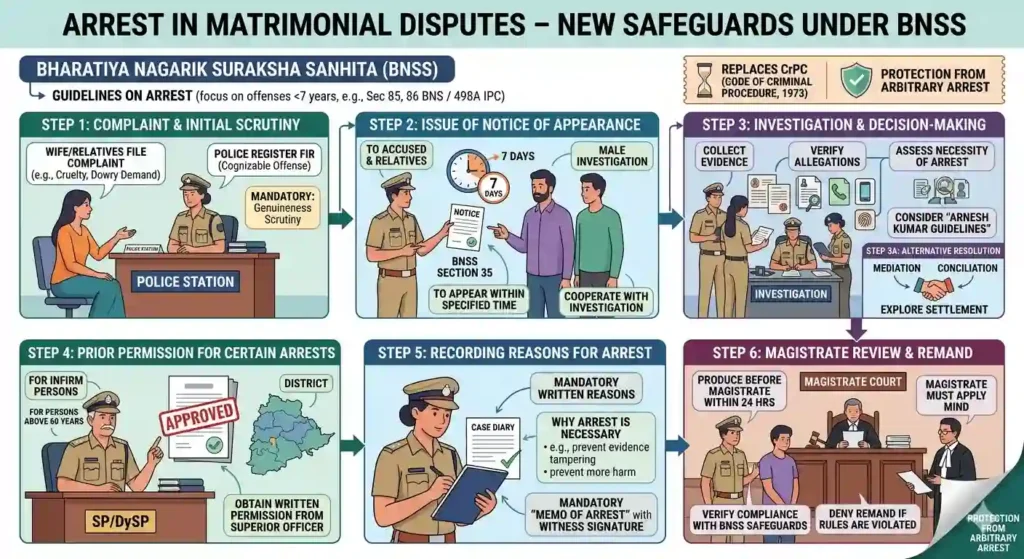
Arrest in Matrimonial Disputes – The Bharatiya Nagarik Suraksha Sanhita reshaped matrimonial arrest procedures across India. Legacy Family Court Law Firm guides spouses through these evolving safeguards. Police officers now follow stricter arrest standards during domestic complaints. Consequently, unnecessary detention risks reduced significantly for many families. Section 35 BNSS requires officers to justify every matrimonial arrest carefully. Police stations in Chennai, Mumbai, Delhi, Bengaluru, and Hyderabad now maintain stronger arrest documentation. Family Courts, Magistrate Courts, and Women Police Cells monitor procedural compliance closely. Furthermore, officers must evaluate reconciliation possibilities before immediate detention. Lawyers frequently review allegations involving cruelty, dowry harassment, emotional abuse, and financial intimidation. BNS provisions replaced older IPC offences across matrimonial litigation proceedings. BSA rules also strengthened evidentiary scrutiny during family disputes.
Arrest in Matrimonial Disputes – New Safeguards Under BNSS – Legacy Family Court Law Firm
Key matrimonial legal remedies include:
- anticipatory bail petitions;
- notice compliance objections;
- mediation requests;
- quashing petitions before High Courts.
These reforms support balanced matrimonial investigations while protecting genuine complainants.
Role of Police Authorities and Women Protection Cells Under BNSS
Women Protection Cells now play crucial roles during matrimonial dispute investigations. Legacy Family Court Law Firm regularly coordinates with local police authorities and counsellors. Police officers cannot arrest accused spouses mechanically after complaint registration. Instead, officers must assess evidence, witness statements, and medical records carefully. BNSS guidelines encourage counselling before coercive measures during minor matrimonial disagreements. Therefore, many disputes now proceed through mediation channels initially. District Legal Services Authorities also provide free counselling and legal aid support. Family Welfare Committees sometimes assist preliminary dispute evaluations in several jurisdictions. Common matrimonial forums include:
- Family Courts;
- Mahila Courts;
- Judicial Magistrate Courts;
- High Courts.
Additionally, cybercrime police stations investigate digital harassment during matrimonial conflicts. BNS offences involving intimidation, stalking, or threats attract separate criminal scrutiny. Proper legal representation prevents procedural abuse while preserving lawful investigation rights under BNSS.
Grounds for Arrest in Dowry Harassment and Cruelty Complaints
Dowry harassment complaints still attract serious scrutiny under BNS matrimonial provisions. However, BNSS introduced safeguards against automatic arrests during preliminary investigations. Police officers now examine physical evidence before restricting personal liberty. Consequently, false implication risks reduced for older parents and distant relatives. Courts frequently discourage routine arrests involving generalized allegations without supporting records. Medical reports, financial transfers, messages, and witness testimony influence investigation decisions heavily. Lawyers often challenge vague complaints before Sessions Courts and High Courts promptly. Relevant matrimonial legal issues include:
- dowry demands;
- domestic violence;
- emotional cruelty;
- financial abandonment;
- child custody intimidation.
Nearby All Women Police Stations usually receive initial matrimonial complaints across Tamil Nadu jurisdictions. Moreover, officers must issue notices before arrest whenever statutory conditions permit. Legal remedies include anticipatory bail, discharge petitions, mediation applications, and constitutional writ petitions under evolving matrimonial jurisprudence.
Notice of Appearance and Protection Against Arbitrary Detention
BNSS strengthened notice procedures for offences carrying limited imprisonment periods. Police officers generally issue appearance notices before considering custodial arrest actions. Therefore, accused spouses receive opportunities to cooperate during matrimonial investigations peacefully. Notice compliance often prevents unnecessary detention during early dispute stages. Officers must record reasons whenever they bypass statutory notice requirements improperly. Courts scrutinize these records carefully during bail hearings and revision proceedings. Legacy Family Court Law Firm advises clients regarding immediate notice compliance obligations. Important compliance documents include:
| Document | Purpose |
|---|---|
| Notice copy | confirms investigation attendance |
| Identity proof | verifies accused details |
| Marriage records | supports matrimonial timeline |
| Medical reports | clarifies alleged injuries |
| High Courts frequently quash illegal arrests violating BNSS procedural safeguards. Additionally, BSA evidentiary rules discourage unsupported allegations during criminal matrimonial proceedings. Proper documentation strengthens defence strategies before police authorities and criminal courts. |
Anticipatory Bail Strategies in Matrimonial Criminal Proceedings
Anticipatory bail remains essential during sensitive matrimonial criminal investigations across India. BNSS provisions preserved judicial discretion while promoting balanced personal liberty protections. Consequently, courts now emphasize cooperation instead of immediate custodial interrogation frequently. Sessions Courts examine complaint credibility, medical evidence, and financial transactions carefully. Lawyers often present settlement discussions during anticipatory bail hearings strategically. Courts may impose travel restrictions, appearance conditions, and witness protection obligations. Legacy Family Court Law Firm prepares comprehensive bail documentation for matrimonial disputes. Effective anticipatory bail strategies usually include:
- prompt legal consultation;
- evidence preservation;
- digital communication analysis;
- mediation participation.
BNS offences involving severe violence may still justify immediate arrest actions. However, routine family disagreements rarely support mechanical detention under revised procedures. High Courts also protect older citizens facing exaggerated matrimonial allegations regularly. Proper advocacy ensures constitutional liberty rights receive meaningful judicial protection.
Family Court Jurisdiction and Criminal Court Coordination
Family Courts and criminal courts frequently handle interconnected matrimonial disputes simultaneously. Therefore, strategic coordination becomes necessary for successful legal outcomes. Family Courts usually address divorce, maintenance, restitution, and child custody proceedings. Criminal Courts evaluate dowry harassment, assault, intimidation, and financial abuse allegations separately. BNSS safeguards influence arrest decisions without affecting legitimate civil matrimonial remedies. Lawyers often synchronize evidence across connected proceedings carefully. BSA provisions strengthened admissibility standards regarding electronic communications and financial records. Common authorities involved during matrimonial litigation include:
- Family Court judges;
- Judicial Magistrates;
- Protection Officers;
- District Legal Services Authorities;
- Women Police Inspectors.
Additionally, mediation centres attached to Family Courts encourage negotiated settlements regularly. Chennai Family Courts often recommend counselling before aggressive litigation escalation. Proper procedural planning reduces conflicting statements across parallel legal proceedings. Experienced matrimonial advocates protect both personal liberty and long-term family interests effectively.
Protection for Older Citizens and Extended Family Members
BNSS safeguards significantly benefited older citizens during matrimonial criminal investigations nationwide. Courts now discourage casual implication of distant relatives without direct involvement evidence. Consequently, older parents often secure interim protection during preliminary inquiry stages. Police officers must evaluate specific allegations against every accused family member separately. Generalized accusations rarely justify immediate arrests under current judicial standards. Legacy Family Court Law Firm frequently defends parents facing exaggerated dowry harassment allegations. High Courts regularly criticize complaints containing repetitive and unsupported accusations. Useful defence measures include:
- residence proof documentation;
- medical condition records;
- travel records;
- financial independence evidence.
BSA provisions also require reliable evidentiary support before sustaining criminal accusations. Moreover, constitutional courts prioritize dignity and liberty rights for vulnerable older citizens. Proper representation before police authorities prevents unlawful harassment during emotionally charged matrimonial conflicts. Timely anticipatory bail applications further reduce detention risks significantly.
Digital Evidence and BSA Compliance in Matrimonial Investigations
Digital evidence now influences almost every matrimonial criminal investigation across modern jurisdictions. BSA provisions established stronger standards regarding electronic records and authentication requirements. Police officers regularly examine emails, social media posts, bank statements, and messaging applications. Consequently, parties must preserve original communications carefully during matrimonial litigation. Courts reject manipulated screenshots lacking proper evidentiary certification frequently. Lawyers usually obtain certified electronic evidence before initiating criminal or civil proceedings. Legacy Family Court Law Firm advises clients regarding lawful digital evidence collection methods. Common electronic evidence categories include:
- WhatsApp chats;
- online banking records;
- call recordings;
- location history;
- medical appointment confirmations.
Cybercrime police stations occasionally assist matrimonial investigations involving online harassment allegations. BNSS procedural safeguards also regulate seizure of digital devices during investigations. Accurate evidence management strengthens both prosecution and defence strategies before criminal courts and Family Courts.
Mediation, Counselling, and Settlement Opportunities Under BNSS
BNSS reforms encouraged mediation and counselling during manageable matrimonial disagreements nationwide. Therefore, courts increasingly promote negotiated settlements before prolonged criminal litigation. Family Counselling Centres often assist spouses experiencing communication breakdowns or financial conflicts. Mediators encourage respectful discussions regarding maintenance, residence, and child visitation arrangements. Legacy Family Court Law Firm supports practical settlements protecting emotional and financial stability. Courts usually appreciate cooperative conduct during pending matrimonial criminal proceedings. Mediation discussions may also influence bail conditions and arrest decisions positively. Important settlement considerations include:
- permanent alimony;
- child education expenses;
- residential rights;
- withdrawal terms;
- future communication protocols.
However, severe domestic violence allegations still require immediate legal intervention and protective orders. Protection Officers under domestic violence legislation coordinate emergency assistance when necessary. Effective mediation frequently reduces litigation costs while preserving family dignity and personal safety.
Arrest Guidelines for Non-Resident Indians in Matrimonial Cases
Non-Resident Indians frequently encounter complex matrimonial investigations involving multiple jurisdictions. BNSS safeguards now provide clearer procedural protections during international matrimonial disputes. Police authorities cannot issue coercive measures without sufficient supporting evidence ordinarily. Consequently, courts carefully examine travel histories, residence status, and communication records. Lookout Circulars require lawful justification during matrimonial criminal investigations involving overseas spouses. Legacy Family Court Law Firm assists NRIs before immigration authorities and criminal courts. Important NRI matrimonial concerns include:
| Legal Issue | Common Forum |
|---|---|
| passport impounding | High Court |
| lookout circular challenge | Sessions Court |
| maintenance claims | Family Court |
| dowry harassment allegations | Magistrate Court |
| Indian embassies sometimes coordinate documentation support during transnational matrimonial proceedings. BSA standards also govern admissibility of foreign electronic evidence carefully. Prompt legal action prevents unnecessary travel restrictions and reputational harm. |
Child Custody Concerns During Matrimonial Criminal Litigation
Child custody disputes often intensify during matrimonial criminal proceedings across Indian jurisdictions. Family Courts prioritize child welfare above parental allegations or emotional disagreements consistently. BNSS arrest safeguards reduce sudden disruptions affecting children’s educational and emotional stability. Consequently, courts frequently discourage unnecessary detention involving primary caregivers. Lawyers usually request interim visitation schedules during pending criminal investigations promptly. Child psychologists occasionally assist courts evaluating welfare and behavioural concerns objectively. Legacy Family Court Law Firm regularly handles guardianship and custody litigation strategically. Key custody considerations include:
- educational continuity;
- medical care;
- emotional safety;
- parental accessibility;
- financial support.
Domestic violence allegations may influence temporary custody arrangements significantly. However, courts still require credible evidence before restricting parental interaction rights. Mediation centres attached to Family Courts sometimes facilitate cooperative parenting arrangements successfully. Structured legal strategies protect children while preserving constitutional rights during matrimonial conflicts.
Domestic Violence Proceedings and BNSS Arrest Limitations
Domestic violence complaints involve separate civil and criminal remedies across Indian jurisdictions. Protection Officers coordinate emergency relief, shelter access, and counselling assistance for aggrieved spouses. However, BNSS safeguards restrict arbitrary arrests during connected criminal investigations carefully. Police officers must assess injury reports and witness evidence before custodial action. Consequently, courts discourage exaggerated allegations lacking independent corroboration frequently. Legacy Family Court Law Firm advises clients regarding overlapping domestic violence and criminal proceedings. Important domestic violence remedies include:
- residence orders;
- protection orders;
- monetary relief;
- temporary custody directions;
- compensation claims.
Magistrate Courts supervise compliance with domestic violence protection orders regularly. BNS offences involving assault or criminal intimidation may attract additional prosecution simultaneously. Proper legal planning prevents contradictory statements across civil and criminal proceedings. Early mediation sometimes resolves non-violent matrimonial disagreements efficiently.
High Court Remedies Against Illegal Matrimonial Arrests
High Courts exercise strong constitutional powers against unlawful matrimonial arrest practices nationwide. Lawyers frequently file writ petitions challenging arbitrary police actions and procedural violations. Consequently, constitutional courts monitor compliance with BNSS safeguards rigorously. Judges often examine arrest memos, notice records, and complaint particulars carefully. Illegal detention may attract compensation claims and departmental scrutiny against responsible officers. Legacy Family Court Law Firm regularly represents clients before Madras High Court and other jurisdictions. Common High Court remedies include:
- anticipatory bail confirmation;
- FIR quashing petitions;
- habeas corpus proceedings;
- lookout circular cancellation;
- investigation transfer requests.
BSA evidentiary standards also influence judicial assessment during constitutional proceedings. Courts generally protect personal liberty when complaints reveal matrimonial vengeance motives. Timely constitutional litigation prevents reputational damage and unnecessary custodial harassment effectively.
Importance of Documentation During Matrimonial Police Investigations
Accurate documentation significantly improves defence preparation during matrimonial criminal investigations today. BNSS safeguards require detailed police records supporting every procedural decision carefully. Therefore, parties should preserve communications, financial records, and medical documentation immediately. Lawyers frequently organize chronological evidence files before police interviews or court appearances. Legacy Family Court Law Firm advises clients regarding lawful evidence preservation methods consistently. Important matrimonial records usually include:
| Record Type | Legal Benefit |
|---|---|
| bank transfers | disproves dowry demands |
| school records | supports custody claims |
| travel tickets | confirms separate residence |
| medical prescriptions | verifies health conditions |
| Courts often rely upon documented timelines during bail and quashing proceedings. BSA provisions strengthened reliability requirements regarding digital and documentary evidence. Proper documentation reduces factual inconsistencies while strengthening judicial credibility substantially. Organized records also accelerate mediation and negotiated settlement discussions effectively. |
Police Station Procedures and Rights of Accused Persons
Police station procedures changed considerably after implementation of BNSS procedural safeguards nationwide. Officers now maintain clearer arrest records during matrimonial criminal investigations. Consequently, accused persons understand their legal rights more effectively during questioning. Police must inform relatives and legal representatives after lawful arrest actions promptly. Lawyers may review arrest documents and challenge procedural irregularities before Magistrate Courts immediately. Legacy Family Court Law Firm regularly assists clients during police station appearances. Important accused rights include:
- legal representation access;
- medical examination requests;
- arrest memo copies;
- notice compliance opportunities;
- family communication rights.
Nearby police stations across Chennai follow revised arrest documentation standards carefully. Courts often criticize officers ignoring statutory safeguards during matrimonial investigations. BNS provisions still permit prosecution for genuine cruelty or violence allegations. Balanced legal guidance protects constitutional liberty without obstructing legitimate police investigations.
Maintenance, Alimony, and Financial Investigation Issues
Financial disputes frequently accompany matrimonial criminal litigation across Indian Family Courts today. Courts evaluate maintenance obligations, income disclosure, and property ownership carefully during hearings. BNSS safeguards indirectly influence negotiations by reducing coercive arrest pressure substantially. Consequently, parties often pursue structured settlements instead of aggressive criminal escalation. Lawyers regularly analyze tax records, salary slips, and investment statements strategically. Legacy Family Court Law Firm assists spouses seeking fair maintenance and alimony outcomes. Common financial issues include:
- interim maintenance;
- permanent alimony;
- child educational expenses;
- shared household rights;
- concealed asset allegations.
BSA evidentiary standards strengthened financial disclosure scrutiny during matrimonial proceedings. Family Courts may impose adverse findings against dishonest income declarations. Effective documentation and transparent negotiation frequently produce sustainable financial settlements. Proper legal planning protects economic stability during emotionally difficult matrimonial conflicts.
Quashing of FIRs and Settlement-Based Criminal Closure
High Courts frequently quash matrimonial FIRs after genuine settlement negotiations conclude successfully. BNSS safeguards encouraged balanced approaches toward family reconciliation and litigation reduction nationwide. Consequently, courts often prefer restorative outcomes during non-violent matrimonial disputes. Lawyers generally prepare settlement memorandums detailing custody, alimony, and withdrawal obligations carefully. Legacy Family Court Law Firm assists parties pursuing lawful settlement-based criminal closure strategies. Important settlement documentation usually includes:
- mutual consent terms;
- financial settlement receipts;
- child custody agreements;
- future litigation withdrawal clauses.
High Courts examine voluntariness before approving FIR quashing requests finally. BNS offences involving severe physical violence may still prevent settlement-based closure occasionally. Courts also verify compliance with pending Family Court obligations carefully. Structured settlements reduce emotional stress, litigation expenses, and reputational harm significantly. Proper drafting prevents future disputes after criminal proceedings conclude.
Future Impact of BNSS Safeguards on Matrimonial Litigation
BNSS safeguards will continue reshaping matrimonial criminal litigation across Indian jurisdictions steadily. Courts increasingly prioritize proportionality, evidence quality, and constitutional liberty protections. Consequently, routine arrests during family disputes may decline further nationwide. Police departments now conduct procedural training regarding lawful matrimonial investigation standards regularly. Legacy Family Court Law Firm monitors emerging judicial precedents involving BNSS, BNS, and BSA provisions. Future matrimonial litigation trends may include:
| Emerging Trend | Expected Impact |
|---|---|
| digital evidence growth | stronger authentication scrutiny |
| mediation expansion | reduced criminal litigation |
| judicial monitoring | fewer arbitrary arrests |
| online hearings | faster procedural compliance |
| Family Courts and criminal courts will likely coordinate proceedings more efficiently. Strong documentation and early legal advice will remain essential for affected spouses. Balanced reforms protect genuine victims while discouraging procedural misuse during matrimonial disputes. |
Frequently Asked Questions
What protection does BNSS provide against automatic matrimonial arrests?
BNSS requires police officers to justify arrests carefully. Courts now demand evidence review, notice compliance, and procedural documentation before custodial action.
Can accused relatives obtain anticipatory bail during dowry harassment investigations?
Yes. Sessions Courts and High Courts regularly grant anticipatory bail when complaints contain vague allegations or insufficient supporting evidence.
Do police officers issue notices before matrimonial arrests under BNSS?
Police officers usually issue appearance notices before arresting accused spouses in less serious matrimonial offences under revised BNSS procedures.
Which courts handle matrimonial criminal disputes and family litigation together?
Family Courts address divorce and maintenance issues. Magistrate Courts and High Courts examine criminal allegations, bail petitions, and FIR challenges.
Can digital chats and emails influence matrimonial criminal investigations?
Yes. BSA provisions recognize electronic evidence when parties provide proper authentication certificates and preserve original digital communications carefully.
How does mediation help during matrimonial criminal proceedings?
Mediation encourages structured settlements regarding custody, maintenance, and communication issues. Courts often appreciate cooperative conduct during ongoing disputes.
Read More
- False Criminal Cases in Family Disputes – Legal Remedies After BNS
- Criminal Breach of Trust in Matrimonial Disputes – BNS vs IPC Explained
- Cruelty to Wife: BNS Provisions Compared With IPC Section 498A
- Residence Orders Under DV Act – Scope of Appellate Interference
- Matrimonial Offences Under BNS vs IPC – Complete Comparative Analysis
- Ministry of Home Affairs