


Handle Complex Custody Battles – Child custody disputes require careful legal analysis because courts prioritize the welfare of children above parental conflicts. Therefore, the Guardians and Wards Act, 1890 remains an important law governing guardianship matters in India. Legacy Family Court Law Firm assists parents, guardians, NRIs, and families facing complex custody challenges. Courts examine emotional bonds, education, safety, financial stability, and overall child welfare before deciding custody matters. Additionally, the Hindu Minority and Guardianship Act, 1956 applies where relevant personal laws govern guardianship rights. Family Courts handle most custody disputes through specialized procedures. Mediation also plays an important role in resolving parental disagreements peacefully. Experienced family lawyers prepare petitions, evidence, and legal arguments before Family Courts, High Courts, and the Supreme Court. Proper legal representation protects parental rights while ensuring children’s best interests remain central throughout proceedings.
Handle Complex Custody Battles Under the Guardians and Wards Act – Legacy Family Court Law Firm
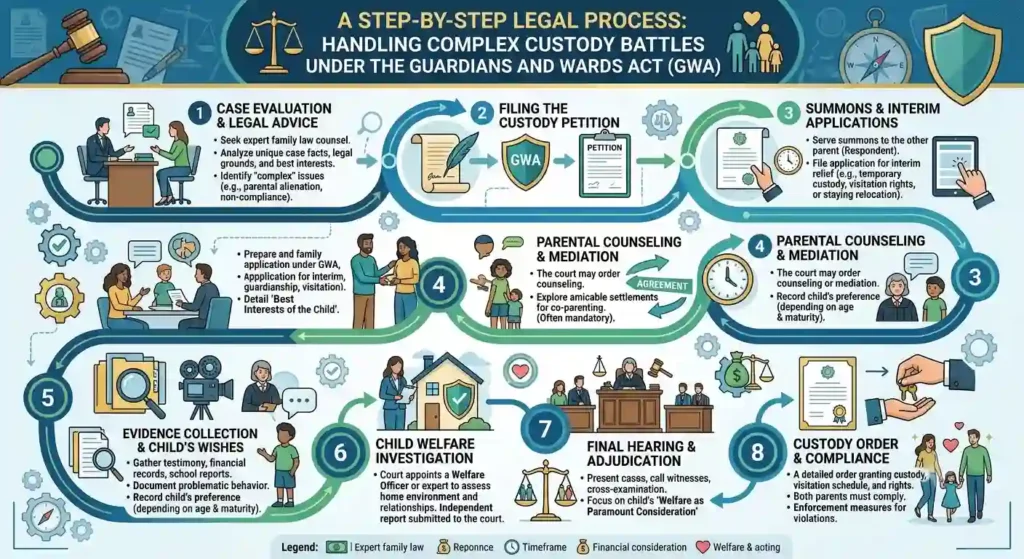
Legal Framework Governing Custody Battles in India
Indian child custody law combines statutory provisions, personal laws, and judicial principles protecting children’s welfare. Consequently, parents should understand applicable legal provisions before approaching courts. The Guardians and Wards Act empowers courts to appoint guardians and determine custody arrangements. Hindu parents may also rely upon the Hindu Minority and Guardianship Act. Other personal laws provide separate guardianship principles for different communities. Courts apply the welfare principle while evaluating custody applications. The Civil Procedure Code governs several procedural aspects of family litigation. Bharatiya Nagarik Suraksha Sanhita, Bharatiya Nyaya Sanhita, and Bharatiya Sakshya Adhiniyam may become relevant in connected criminal or evidentiary issues. Family Courts consider domestic violence, neglect, substance abuse, and child safety concerns. Professional legal support helps families navigate complex custody proceedings before appropriate judicial forums.
Factors Considered by Courts During Custody Decisions
Courts evaluate multiple factors before granting custody or visitation rights under Indian family laws. Accordingly, parents should understand the considerations influencing judicial decisions. The child’s welfare remains the primary consideration rather than automatic parental preference. Judges examine emotional relationships, educational requirements, health conditions, and living arrangements. Financial capacity alone does not determine custody outcomes. Courts also consider each parent’s ability to provide a secure environment. Important factors include:
| Custody Factor | Court Consideration |
|---|---|
| Child Welfare | Overall physical and emotional development |
| Parent Relationship | Emotional attachment and care history |
| Education | Schooling and future opportunities |
| Safety | Protection from harm or neglect |
| Stability | Consistent living environment |
Therefore, detailed evidence and professional representation strengthen custody claims. Legacy Family Court Law Firm helps clients present complete factual backgrounds before Family Courts.
Types of Custody Arrangements Available
Indian courts may grant different custody arrangements depending upon children’s welfare and family circumstances. Therefore, parents should understand available legal options before filing petitions. Physical custody determines where the child primarily resides. Legal custody concerns decision-making authority regarding education, healthcare, and important matters. Joint custody allows both parents participation in child development. Visitation rights permit regular contact with the non-custodial parent. Courts customize arrangements according to individual circumstances. Common custody options include:
- Sole physical custody.
- Joint custody arrangements.
- Shared parenting schedules.
- Temporary custody orders.
- Supervised visitation rights.
- Holiday and vacation access.
Additionally, courts may modify existing arrangements when circumstances significantly change. Family lawyers assist parents in seeking suitable custody solutions while protecting children’s emotional and developmental needs.
Filing Custody Petitions Before Family Courts
Custody petitions require proper legal drafting, factual presentation, and supporting evidence before Family Courts. Consequently, parents should prepare carefully before initiating proceedings. The petitioner must establish reasons supporting custody requests. Courts review pleadings, documents, and witness statements during hearings. Legal representatives prepare applications under the Guardians and Wards Act with relevant facts. Essential documents may include:
- Child birth certificate.
- Marriage or divorce records.
- School documents.
- Medical records.
- Financial documents.
- Communication records.
- Evidence regarding child welfare.
Furthermore, courts may order counselling or mediation before final decisions. Family Courts encourage settlements whenever possible because cooperative parenting benefits children. Legacy Family Court Law Firm provides strategic assistance throughout filing, hearings, mediation, and appellate proceedings before Family Courts and High Courts.
Managing Evidence and Legal Strategies in Custody Disputes
Complex custody battles require strong evidence because courts decide matters based on children’s welfare and parental capability. Therefore, parents should maintain complete records supporting their custody claims. Courts examine school performance, medical needs, communication history, and caregiving involvement carefully. Additionally, evidence regarding neglect, abuse, or unsafe conditions may influence judicial decisions. Lawyers prepare submissions explaining why specific custody arrangements benefit children. Relevant evidence may include:
| Evidence Type | Legal Purpose |
|---|---|
| School Records | Shows educational stability |
| Medical Reports | Establishes health requirements |
| Messages | Demonstrates parental communication |
| Financial Records | Shows support capacity |
| Witness Statements | Supports factual claims |
Moreover, courts may consider reports from child welfare experts or counsellors. Professional legal assistance helps parents present evidence effectively. Legacy Family Court Law Firm represents clients before Family Courts, High Courts, and appellate forums. Proper strategy protects parental interests while maintaining focus on children’s welfare.
Role of Mediation and Family Courts in Custody Matters
Family Courts encourage mediation because peaceful settlements often protect children from prolonged disputes. Therefore, parents should consider alternative dispute resolution before extensive litigation. Mediation allows parents to discuss custody schedules, education decisions, and visitation arrangements confidentially. Family Courts established under the Family Courts Act, 1984 handle custody disputes through specialized procedures. Judges may refer matters to counsellors or mediation centres. Additionally, settlements can reduce emotional stress and legal expenses. However, courts intervene when agreements fail or child safety concerns arise. Family lawyers assist clients during mediation sessions and court hearings. They ensure settlement terms protect parental rights and children’s welfare. Legacy Family Court Law Firm provides representation throughout negotiations, mediation, and contested custody proceedings. Effective legal guidance helps families achieve practical solutions while respecting judicial principles.
Challenges Faced During International and NRI Custody Battles
International custody disputes create additional legal complications involving jurisdiction, foreign residence, and child relocation issues. Consequently, NRIs require specialized family law guidance before initiating proceedings. Courts examine habitual residence, parental consent, and child welfare carefully. International travel restrictions may require specific judicial directions. Foreign custody orders may require recognition under Indian legal principles. Lawyers evaluate applicable treaties, foreign judgments, and domestic laws. Common challenges include:
- Relocation of children abroad.
- Conflicting foreign and Indian custody orders.
- Access difficulties for non-resident parents.
- International visitation arrangements.
- Enforcement of custody directions.
Furthermore, courts prioritize children’s welfare over parental convenience. NRIs should obtain legal advice before removing children from jurisdiction. Legacy Family Court Law Firm assists Indian and overseas clients in custody petitions, enforcement proceedings, and related family disputes before competent courts.
Modification and Enforcement of Custody Orders
Custody arrangements may require modification when family circumstances change significantly. Therefore, parents can approach courts seeking revised custody or visitation orders. Changes in employment, relocation, health conditions, or child requirements may justify modifications. Courts reassess existing arrangements based on current welfare considerations. Additionally, violations of custody orders may require enforcement proceedings. Parents should maintain records showing non-compliance or changed circumstances. Legal remedies may include:
- Modification petitions before Family Courts.
- Enforcement applications.
- Contempt proceedings where applicable.
- Visitation enforcement requests.
- Appeals before higher courts.
Courts examine each application according to facts and applicable laws. Professional legal representation strengthens arguments during modification proceedings. Legacy Family Court Law Firm helps clients protect parental rights while ensuring continued compliance with judicial custody directions.
Criminal Issues Connected With Custody Disputes
Custody disputes sometimes involve allegations requiring criminal law intervention alongside family proceedings. Hence, parents should understand available legal protections. Allegations may include child abuse, unlawful retention, harassment, intimidation, or domestic violence. Bharatiya Nyaya Sanhita addresses criminal offences connected with such allegations. Bharatiya Nagarik Suraksha Sanhita governs investigation procedures and criminal proceedings. Bharatiya Sakshya Adhiniyam regulates evidence presented before courts. Police stations may investigate complaints involving criminal allegations according to jurisdiction. Courts balance criminal allegations with custody considerations. The Civil Procedure Code may apply to connected civil proceedings. Legal remedies may include:
- Criminal complaints before police authorities.
- Protection applications before courts.
- Bail proceedings where required.
- Evidence-based defence strategies.
- Appeals before higher judicial forums.
Experienced family and criminal lawyers coordinate proceedings to protect clients’ legal interests effectively.
Legacy Family Court Law Firm Custody Litigation Support
Child custody disputes require experienced legal representation because family relationships and children’s welfare remain sensitive issues. Therefore, Legacy Family Court Law Firm provides comprehensive custody litigation services for parents, guardians, NRIs, and families across India. Our advocates handle custody petitions, guardianship applications, visitation disputes, relocation matters, and enforcement proceedings. Additionally, we prepare evidence strategies and legal submissions before Family Courts, High Courts, and the Supreme Court. Our team evaluates every case under the Guardians and Wards Act, Hindu Minority and Guardianship Act, Family Courts Act, and applicable procedural laws. We also assist clients during mediation and settlement discussions. Professional guidance helps families understand legal options and court procedures. Strategic representation protects parental rights while ensuring courts receive complete information regarding children’s welfare, safety, education, and emotional development.
Why Choose Legacy Family Court Law Firm
Complex custody battles require practical legal solutions because every family situation involves unique circumstances. Moreover, experienced family lawyers help clients make informed decisions during emotionally challenging proceedings. Legacy Family Court Law Firm focuses on child welfare, parental rights, and effective courtroom strategies. Our advocates review custody facts, prepare petitions, collect supporting documents, and present arguments before appropriate forums. We represent clients in contested custody matters, mutual arrangements, visitation disputes, and guardianship proceedings. Additionally, our team handles related legal issues involving divorce, maintenance, domestic disputes, and criminal allegations. Clients receive personalized legal support throughout negotiations, mediation, hearings, and appeals. We maintain clear communication during every stage of litigation. Professional representation improves legal outcomes while promoting solutions that protect children’s long-term interests.
Conclusion
Handling complex custody battles under the Guardians and Wards Act requires careful planning, strong evidence, and experienced legal support. Consequently, parents should seek professional advice before initiating custody proceedings. Courts always prioritize children’s welfare while evaluating custody applications and visitation requests. Proper documentation, effective arguments, and strategic representation improve the chances of favourable outcomes. Additionally, mediation can provide practical solutions when parents cooperate. However, courts intervene firmly where child safety or welfare concerns arise. Legacy Family Court Law Firm assists clients before Family Courts, High Courts, and other judicial forums. Our advocates provide custody litigation, guardianship advice, mediation support, and appellate representation. The Guardians and Wards Act, Family Courts Act, CPC, BNS, BNSS, and BSA create the legal framework for related proceedings. Timely legal assistance protects families and supports children’s best interests.
Frequently Asked Questions
Q1. What law governs child custody cases in India?
Answer: The Guardians and Wards Act, 1890 mainly governs custody proceedings. Personal laws, the Family Courts Act, and judicial principles also influence custody decisions.
Q2. Which court handles custody disputes?
Answer: Family Courts generally handle custody disputes. High Courts may hear appeals, revisions, or constitutional matters involving custody proceedings.
Q3. Can NRIs file child custody cases in India?
Answer: Yes, NRIs can approach Indian courts for custody matters when jurisdiction requirements exist and children’s welfare requires judicial protection.
Q4. What factors decide child custody?
Answer: Courts consider child welfare, education, safety, emotional attachment, parental ability, stability, and overall developmental needs before granting custody.
Q5. Can custody orders be changed later?
Answer: Yes, courts may modify custody orders when circumstances change significantly or when modification serves the child’s welfare.
Q6. Why hire Legacy Family Court Law Firm for custody matters?
Answer: Legacy Family Court Law Firm provides custody petitions, mediation support, evidence preparation, litigation assistance, and representation before Family Courts and higher courts.
Read More
- Legal Help for High-Profile Divorce Cases Under the Hindu Marriage Act
- Secure Inheritance Rights Under the Indian Succession Act
- Expert Legal Help for Domestic Violence Under the DV Act
- Secure Child Visitation Rights Under the Guardians and Wards Act
- Fight for Fair Alimony Under the Hindu Marriage Act
- Ministry of Law and Justice – Legislative Department