

Multiple FIRs in Matrimonial Disputes – Marriage disputes often trigger criminal and civil proceedings simultaneously. However, some parties file multiple FIRs concerning identical allegations. Such actions create legal complications and procedural unfairness. Courts consistently discourage repetitive criminal proceedings arising from the same matrimonial facts. Multiple FIRs may involve allegations under the Bharatiya Nyaya Sanhita, domestic violence laws, maintenance proceedings, and child custody disputes. Consequently, affected spouses face repeated investigations, travel burdens, and reputational damage. The legal system protects citizens from harassment through overlapping prosecutions. High Courts frequently exercise inherent powers to prevent abuse of process. Family Courts, Magistrate Courts, and Police Departments must act within jurisdictional limits. Legacy Family Court Law Firm assists husbands, wives, NRIs, and families facing repetitive complaints, false allegations, malicious prosecutions, and jurisdictional disputes across India.
Multiple FIRs in Matrimonial Disputes – Abuse of Process Explained – Legacy Family Court Law Firm: Chennai Divorce Experts
Understanding Multiple FIRs in Matrimonial Litigation
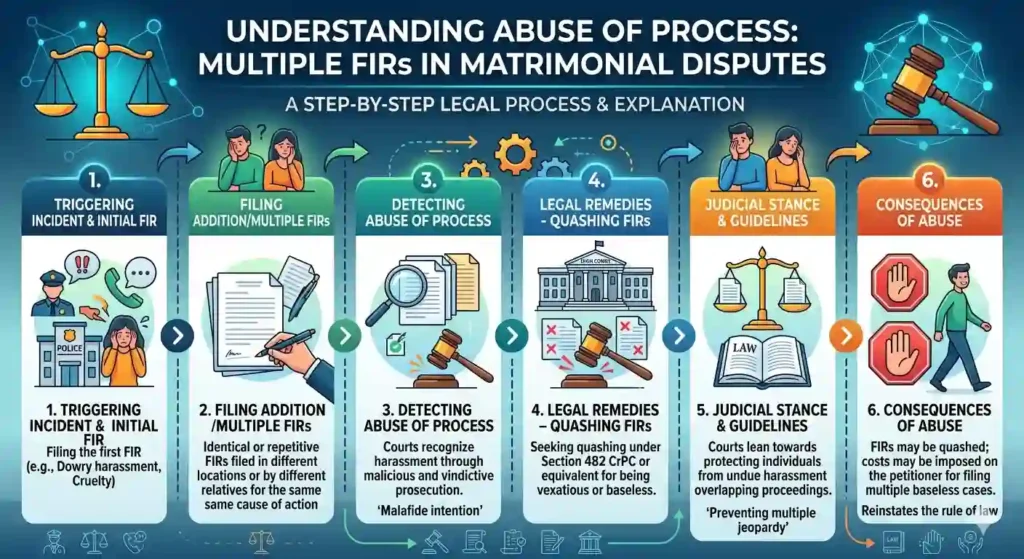
Multiple FIRs arise when similar allegations appear in separate police complaints. Courts generally prohibit duplicate FIRs concerning identical transactions. Therefore, authorities must examine whether the second complaint introduces genuinely new facts. Matrimonial disputes commonly involve allegations relating to cruelty, dowry demands, intimidation, and financial misconduct. Police stations occasionally receive complaints from different jurisdictions. Nevertheless, territorial jurisdiction cannot justify repetitive criminal proceedings automatically. Courts evaluate complaint contents, timelines, and alleged incidents carefully. The BNSS provides procedural safeguards against arbitrary investigations. Furthermore, constitutional protections prevent misuse of criminal law mechanisms. Parties should preserve complaint copies, notices, and investigation records. Skilled matrimonial lawyers analyze whether subsequent FIRs represent legitimate grievances or deliberate harassment intended to pressure settlement negotiations.
Why Courts Treat Multiple FIRs as Abuse of Process
Courts protect litigants from repetitive prosecution and procedural injustice. Abuse of process occurs when legal machinery serves improper objectives. Consequently, judges scrutinize repetitive complaints with considerable caution. Matrimonial litigation frequently becomes emotionally charged and strategically complex. Some complainants initiate parallel proceedings to increase pressure upon spouses. High Courts often intervene where allegations substantially overlap. Judicial precedents emphasize fairness, proportionality, and procedural discipline. Moreover, duplicate investigations waste public resources and burden police departments. The legal system encourages genuine dispute resolution rather than harassment. Lawyers frequently seek quashing remedies where repetitive FIRs lack independent factual foundations. Proper judicial oversight ensures accountability while preserving legitimate rights of complainants and accused persons within matrimonial conflicts.
Common Matrimonial Offences Invoked in Repetitive FIRs
Several allegations repeatedly appear in matrimonial complaints across jurisdictions. Authorities assess each accusation independently under applicable laws. However, duplication becomes problematic when allegations remain substantially identical.
| Common Allegation | Relevant Law |
|---|---|
| Cruelty | BNS |
| Criminal Intimidation | BNS |
| Breach of Trust | BNS |
| Dowry Related Allegations | Dowry Laws |
| Domestic Violence | Special Statutes |
Common legal concerns include:
- Jurisdiction conflicts.
- Duplicate investigations.
- Multiple police notices.
- Parallel proceedings.
- Forum shopping.
Therefore, experienced legal representation becomes crucial during early litigation stages.
Legal Principles Governing Multiple FIRs
Indian courts recognize important principles restricting repetitive criminal proceedings. The same occurrence should not generate endless investigations. Consequently, courts compare factual foundations rather than complaint labels. A fresh FIR may survive scrutiny if distinct events emerge subsequently. However, cosmetic changes cannot justify repetitive prosecution. High Courts exercise inherent powers to protect procedural fairness. The BNSS framework supports judicial intervention against misuse. Additionally, constitutional remedies remain available before appropriate courts. Lawyers often examine witness statements, timelines, and documentary evidence. Strategic legal review helps determine whether a complaint presents independent allegations. Effective defense begins with careful analysis of every accusation, procedural step, and jurisdictional aspect involved in the dispute.
Jurisdiction Issues in Matrimonial FIRs
Jurisdiction disputes frequently arise in matrimonial litigation. Spouses often reside in different cities after separation. Therefore, complaints may reach multiple police stations simultaneously. Authorities must determine territorial jurisdiction carefully before proceeding. Matrimonial events sometimes occur across several states and districts. Courts analyze where alleged acts actually occurred. Furthermore, convenience alone cannot determine jurisdiction. Police departments should coordinate investigations where overlapping allegations exist. Improper jurisdiction may strengthen challenges against repetitive proceedings. Family Courts and Criminal Courts examine jurisdictional objections differently. Legal counsel can evaluate whether investigative authorities exceeded statutory limits. Early jurisdictional challenges often reduce unnecessary litigation and procedural complications significantly.
Role of Police Stations and Investigating Agencies
Police stations play a central role in matrimonial criminal proceedings. Investigators must follow statutory safeguards during inquiry stages. Consequently, fairness remains essential throughout the investigative process. Authorities should avoid duplicate investigations regarding identical allegations. Investigating officers review witness accounts, documents, and electronic evidence. The BSA governs evidentiary standards relevant to criminal proceedings. Moreover, procedural compliance strengthens investigation credibility. Citizens possess rights during questioning and document collection. Legal assistance helps parties understand obligations and protections. Nearby police stations must respect jurisdictional requirements before registering complaints. Proper investigation balances complainant interests with accused rights. Transparent procedures reduce disputes concerning bias, duplication, and procedural irregularities.
Remedies Against Multiple FIRs
The law provides several remedies against repetitive matrimonial complaints. Parties should act promptly after receiving notices. Therefore, early legal intervention often produces better outcomes.
Available remedies include:
- Quashing petitions before High Courts.
- Jurisdictional objections.
- Consolidation requests.
- Anticipatory bail applications.
- Discharge petitions.
- Constitutional remedies.
Relevant forums include:
- High Courts.
- Family Courts.
- Magistrate Courts.
- Sessions Courts.
- Supreme Court.
Strategic litigation planning reduces financial costs and emotional strain. Experienced advocates assess facts before selecting appropriate remedies.
High Court Powers and Quashing Proceedings
High Courts possess significant authority to prevent abuse of process. These powers protect citizens from unjust prosecutions. Consequently, many matrimonial litigants approach High Courts for relief. Judges evaluate whether allegations disclose independent offences. Courts also review procedural irregularities and jurisdictional defects. Repetitive FIRs often attract strict judicial scrutiny. Moreover, judges consider fairness, public interest, and legal consistency. Documentary evidence frequently influences quashing decisions. Legal teams prepare comprehensive petitions supported by precedents and records. Successful challenges may terminate unnecessary proceedings at an early stage. Effective representation before constitutional courts significantly improves prospects for meaningful relief and procedural protection.
Impact on Divorce, Custody, and Maintenance Cases
Multiple FIRs often affect related family proceedings. Divorce petitions, custody disputes, and maintenance claims may proceed simultaneously. Therefore, litigation strategies require careful coordination. Courts consider overall conduct during matrimonial adjudication. Repetitive complaints sometimes influence settlement discussions and parenting arrangements. Family Courts focus upon welfare, fairness, and legal rights. Additionally, conflicting statements across proceedings may affect credibility assessments. Lawyers must maintain consistency throughout every forum. Comprehensive case management reduces procedural risks. Proper documentation supports factual accuracy during hearings. Integrated legal representation helps families navigate criminal and civil proceedings efficiently while protecting long-term interests and litigation objectives.
Key Evidence Used in Abuse of Process Claims
Evidence plays a decisive role in challenging repetitive FIRs. Courts require objective material rather than assumptions. Consequently, parties should preserve every relevant record carefully.
Important evidence includes:
| Evidence Type | Purpose |
|---|---|
| FIR Copies | Comparison of allegations |
| Notices | Procedural review |
| Messages | Timeline verification |
| Emails | Context analysis |
| Orders | Judicial assessment |
Additional documents include:
- Travel records.
- Medical records.
- Call logs.
- Court pleadings.
- Witness statements.
Strong documentation frequently strengthens abuse of process arguments before courts.
Legal Support for Husbands, Wives, and NRIs
Matrimonial disputes affect individuals across different backgrounds and jurisdictions. NRIs often face additional challenges involving travel and jurisdiction. Therefore, specialized legal assistance becomes essential. Lawyers coordinate responses across courts, police departments, and tribunals. Effective representation includes notice replies, bail proceedings, and quashing petitions. Moreover, legal teams assist during mediation and settlement negotiations. Timely advice prevents procedural mistakes and unnecessary admissions. Clients benefit from coordinated litigation strategies covering criminal and family matters. Professional advocacy protects rights while encouraging lawful dispute resolution. Legacy Family Court Law Firm delivers comprehensive support for complex matrimonial litigation involving repetitive FIRs, jurisdictional conflicts, and abuse of process allegations.
Frequently Asked Questions
FAQ 1: Can multiple FIRs arise from the same matrimonial dispute?
Generally, courts discourage duplicate FIRs based on identical facts. A fresh complaint needs distinct allegations and separate causes of action.
FAQ 2: What is abuse of process in matrimonial cases?
Abuse of process occurs when legal proceedings serve harassment or improper purposes instead of genuine dispute resolution objectives.
FAQ 3: Can a High Court quash repetitive FIRs?
Yes. High Courts may quash duplicate FIRs where allegations substantially overlap and create procedural unfairness.
FAQ 4: Does jurisdiction matter in matrimonial FIRs?
Yes. Police authorities must establish territorial jurisdiction before proceeding. Jurisdiction defects may support legal challenges.
FAQ 5: How can NRIs respond to multiple matrimonial complaints?
NRIs may seek legal representation, anticipatory bail, quashing relief, and coordinated defense strategies across jurisdictions.
FAQ 6: What evidence helps prove repetitive prosecution?
FIR copies, notices, pleadings, messages, emails, witness statements, and court records often support abuse of process claims.
Read More
- Quashing Matrimonial FIRs in High Court After BNSS
- Anticipatory Bail in Matrimonial Cases – BNSS vs Old CrPC
- Arrest in Matrimonial Disputes – New Safeguards Under BNSS
- Criminal Breach of Trust in Matrimonial Disputes – BNS vs IPC Explained
- False Criminal Cases in Family Disputes – Legal Remedies After BNS
- Department of Justice (Ministry of Law & Justice)