

The Muslim Personal Law (Shariat) Application Act, 1937 plays a crucial role in governing personal matters for Muslims in India. This law primarily deals with issues such as marriage, divorce, maintenance, inheritance, and custody, ensuring that personal matters are addressed according to Islamic principles. While the act provides clarity on various issues, navigating its provisions can be challenging, especially in complex family disputes. At Legacy Family Court Law Firm: Chennai Divorce Experts, we guide our clients with practical solutions and expert legal advice to protect their rights.
Legal Guidance for Muslims Under the Muslim Personal Law (Shariat) Application Act – Legacy Family Court Law Firm
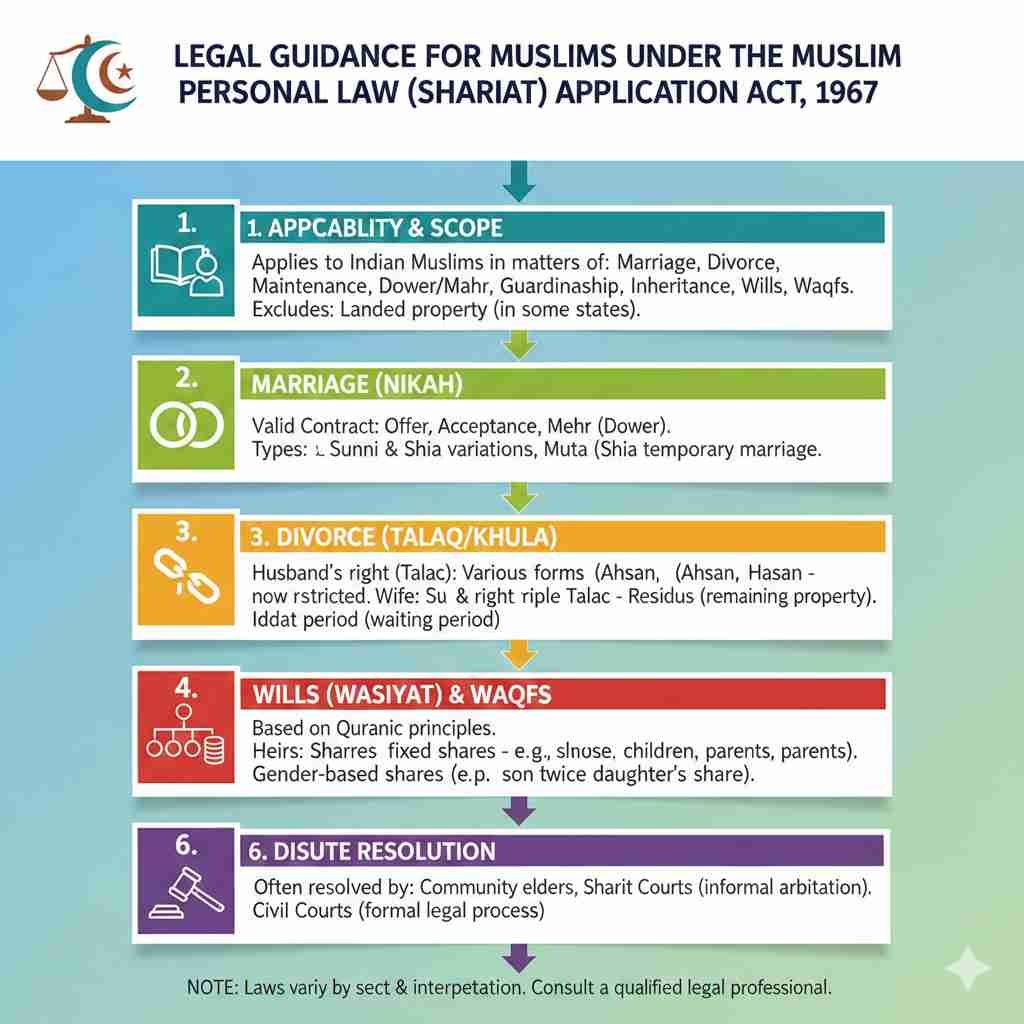
Overview of the Muslim Personal Law (Shariat) Application Act
The Muslim Personal Law (Shariat) Application Act was enacted to apply Islamic personal law to Muslims in India. It ensures that in matters relating to marriage, divorce, inheritance, and maintenance, Muslim personal law is applied instead of general civil laws.
The act emphasizes the following:
- Marriage: Recognition of Nikah, rights of spouses, and conditions for a valid marriage.
- Divorce: Procedures like Talaq, Khula, and Mubarat are recognized.
- Maintenance: Responsibilities of a husband to provide for his wife and children.
- Inheritance: Distribution of property according to Quranic principles.
- Guardianship and Custody: Determining custody of minor children post-divorce.
This law allows Muslims to manage their personal affairs within the framework of their faith while respecting the Indian legal system.
Marriage Under Muslim Personal Law
Marriage, or Nikah, is a sacred contract in Islam. Under the act, a marriage is considered valid when:
- Both parties consent freely.
- A marriage contract (Nikah Nama) is executed.
- Witnesses are present.
- Dower (Mahr) is agreed upon.
It is crucial to document marriages properly. At Legacy Family Court Law Firm, we advise clients on registering marriages and preparing legal agreements to prevent future disputes.
Rights and Obligations in Marriage
Muslim personal law prescribes mutual rights and duties. The husband must provide maintenance, while the wife is entitled to respect, support, and her agreed dower. Ignoring these obligations may lead to legal action in family courts.
Divorce and Separation
Divorce is a sensitive issue, and Muslim personal law provides several avenues for ending a marriage:
- Talaq – Pronounced by the husband, following proper procedure.
- Khula – Initiated by the wife with consent from the husband or court.
- Mubarat – Mutual consent divorce.
- Judicial Divorce – Court intervention in cases of cruelty, desertion, or irretrievable breakdown.
Proper legal guidance is essential because improper procedures can render a divorce invalid. At our firm, we assist clients in filing cases, documenting claims, and ensuring all legal formalities are followed.
Maintenance and Financial Support
Maintenance is a key aspect of Muslim personal law. The husband is legally bound to provide financial support to his wife and children during marriage and sometimes post-divorce. Courts consider income, living standards, and family needs while determining maintenance. Early intervention by legal experts helps ensure that claims are reasonable and enforceable.
Custody and Guardianship of Children
After divorce, custody of children is often a contentious issue. The act emphasizes the welfare of the child as paramount. Generally:
- Mothers have priority for custody of minor children.
- Fathers are usually responsible for financial support.
- Courts may modify custody arrangements based on the child’s best interests.
At Legacy Family Court Law Firm, we represent clients in custody disputes, ensuring that children’s rights and well-being are protected while adhering to Shariat principles.
Inheritance and Property Rights
Inheritance under Muslim law follows Quranic guidelines, dividing property among heirs in prescribed shares. Key points include:
- Sons typically receive twice the share of daughters.
- Spouses are entitled to a fixed share depending on the number of children.
- Parents and grandparents may also have designated shares.
Legal disputes often arise when property is not distributed according to these rules. Our firm assists in preparing wills, executing claims, and resolving disputes amicably or through court intervention.
Challenges in Applying Muslim Personal Law
While the act provides a legal framework, there are challenges:
- Lack of Awareness: Many individuals are unaware of their rights and obligations.
- Documentation Issues: Improper marriage or inheritance records can lead to disputes.
- Conflict with Civil Laws: Certain situations may require balancing Shariat law with Indian statutory laws.
- Judicial Interpretation: Courts may interpret provisions differently in complex cases.
Navigating these challenges requires experienced legal support. Our team at Legacy Family Court Law Firm ensures that clients receive clear, actionable advice.
Legal Guidance for Individuals
Individuals often require guidance in matters such as:
- Filing for divorce or Khula.
- Claiming maintenance or alimony.
- Securing child custody.
- Protecting inheritance rights.
We guide clients step by step, preparing documentation, filing petitions, and representing them in family courts.
Guidance for Companies and NGOs
Companies and NGOs may encounter issues when:
- Handling employee benefits in accordance with Muslim personal law.
- Dealing with property or inheritance-related disputes involving Muslim stakeholders.
- Ensuring compliance with personal law in charitable activities.
Our firm provides specialized advisory services to organizations, helping them navigate these legal obligations efficiently.
Guidance for NRIs
Non-Resident Indians (NRIs) often face unique challenges:
- Divorce or maintenance claims across borders.
- Inheritance disputes involving properties in India.
- Ensuring compliance with Shariat law while living abroad.
We help NRIs understand their rights under Indian law, assist in cross-border legal matters, and represent them effectively in Indian courts.
Preventive Measures
Preventive legal measures are crucial to avoid disputes. These include:
- Proper documentation of marriages, divorce agreements, and wills.
- Maintaining clear records of financial transactions and property ownership.
- Seeking early legal consultation in case of conflicts.
Proactive steps can save time, reduce legal costs, and prevent prolonged litigation.
Role of Legal Experts
At Legacy Family Court Law Firm, our approach combines legal expertise with empathy. We:
- Analyze individual circumstances.
- Interpret Muslim personal law in the context of Indian courts.
- Draft precise legal documents.
- Represent clients in mediation, negotiation, and litigation.
Our focus is on resolving matters efficiently while safeguarding clients’ rights and family harmony.
Frequently Asked Questions
The Act, enacted in 1937, governs personal matters for Muslims in India, including marriage, divorce, maintenance, inheritance, and custody. It ensures that Islamic principles are applied in these matters instead of general civil laws.
Marriage under the Act requires consent, witnesses, and a marriage contract (Nikah Nama). Divorce can be initiated by the husband (Talaq), wife (Khula), mutual consent (Mubarat), or through judicial intervention in cases of cruelty or desertion. Proper documentation is crucial for validity.
Husbands are legally obligated to provide financial support to their wives and children. Custody of minor children generally favors the mother, while fathers provide financial support. Courts consider the welfare of the child as the primary factor in custody decisions.
Inheritance is distributed according to Quranic guidelines. Sons typically receive double the share of daughters, and spouses, parents, and grandparents may have designated shares. Legal disputes can arise if property is not divided according to these rules.
Legal experts provide guidance on filing petitions, documenting marriages and divorces, claiming maintenance, resolving inheritance disputes, and navigating cross-border issues for NRIs. They ensure compliance with Shariat law while protecting clients’ rights in Indian courts.
Conclusion
The Muslim Personal Law (Shariat) Application Act ensures that personal matters for Muslims are addressed according to faith while respecting Indian law. However, complexities in marriage, divorce, custody, maintenance, and inheritance require professional guidance.
At Legacy Family Court Law Firm: Chennai Divorce Experts, we provide comprehensive legal support for individuals, companies, NGOs, and NRIs. From filing petitions to securing maintenance, resolving custody disputes, and handling inheritance claims, our team ensures that every case is managed with precision, care, and compassion.
Read More
- Secure Custody Rights Under the Hindu Minority and Guardianship Act
- Child Custody and Guardianship Under the Guardians and Wards Act
- Legal Guidance for Divorce Under the Special Marriage Act
- Resolve Maintenance Disputes Under the Hindu Adoption and Maintenance Act
- Inheritance Rights for Christians Under the Indian Succession Act
- Legislative Department Personal Laws Related Page