


Divorce is never an easy step, especially when couples married under the Special Marriage Act, 1954 (SMA). This law helps people from different religions, communities, and nationalities marry legally in India. However, when a marriage breaks down, spouses often feel confused, worried, and unsure about the legal path ahead. At Legacy Family Court Law Firm: Chennai Divorce Experts, we guide individuals, couples, and families through these difficult moments with clarity, empathy, and professional care.
In this article, we explain the complete process of divorce under the Special Marriage Act, your rights, your options, and how our experienced team can support you at every stage.
Legal Guidance for Divorce Under the Special Marriage Act – Legacy Family Court Law Firm
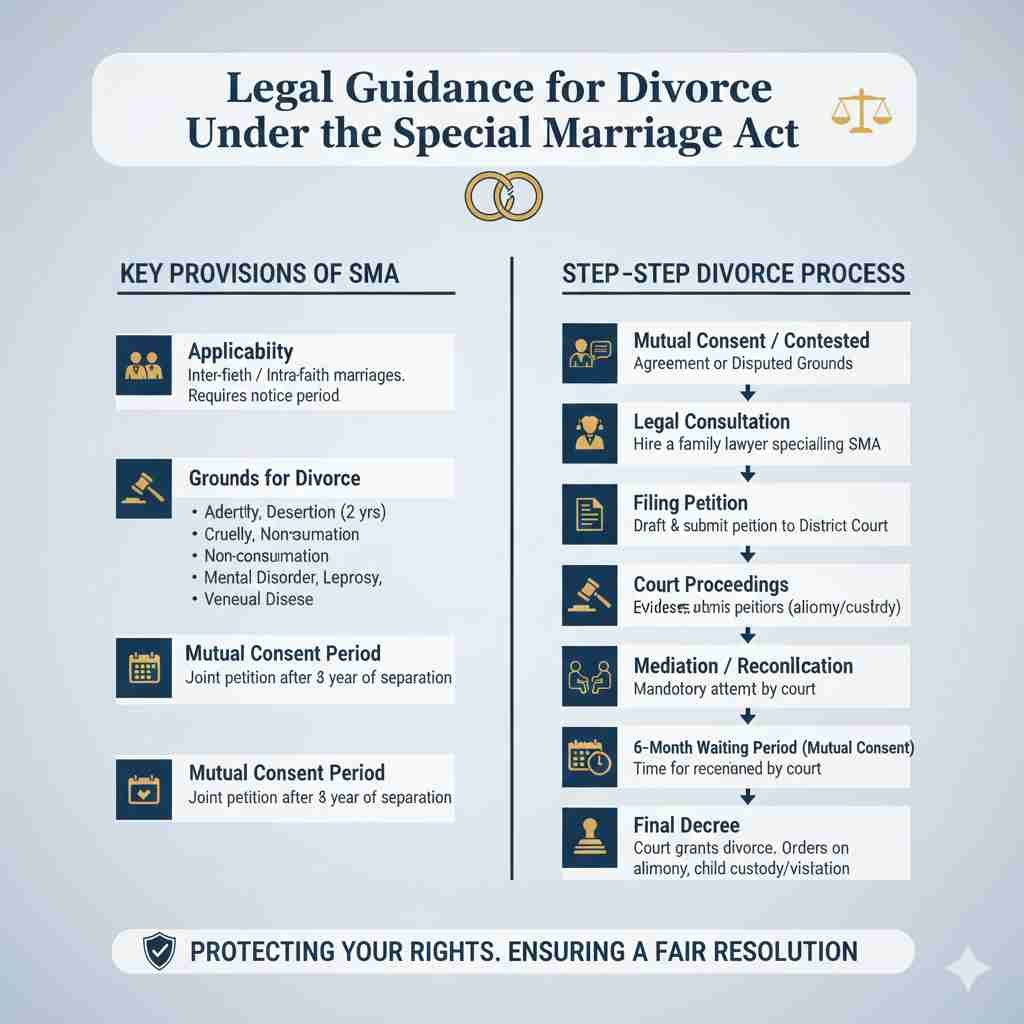
Understanding Divorce Under the Special Marriage Act
The Special Marriage Act provides a structured, secular, and uniform method for marriage and divorce. Unlike personal laws such as Hindu or Muslim divorce laws, SMA applies to any couple who married through a civil marriage—regardless of religion.
Divorce under this Act follows a clear legal process. However, because the procedures are detailed and sometimes lengthy, many people struggle without proper legal support. That is why our law firm focuses on making these steps easier and less stressful.
Types of Divorce Available Under the Special Marriage Act
Divorce under SMA can happen in two major ways. Understanding them will help you decide the right path.
1. Divorce by Mutual Consent
This is the most peaceful and smooth option. In this type of divorce:
- Both spouses agree to end the marriage.
- They also agree on matters like child custody, alimony, property division, and future responsibilities.
- There is no need to prove misconduct or wrongdoing.
Under SMA, the couple must live separately for one year before filing for mutual consent divorce. While this may feel long, it is required by law.
Mutual consent divorce is faster, more affordable, and less emotionally draining. At Legacy Family Court Law Firm, we help couples draft clear, balanced agreements and complete all legal paperwork without confusion.
2. Contested Divorce
When spouses cannot agree, one partner may file for divorce based on specific legal grounds. These include:
- Cruelty
- Desertion for at least two years
- Adultery
- Imprisonment for a criminal offence
- Mental disorder that affects marital life
- Venereal disease
- Presumption of death after seven years of no contact
Contested divorces take more time because the court examines evidence, hears witnesses, and reviews arguments. This can be stressful, but with experienced family court lawyers, your case becomes easier to manage.
Step-by-Step Divorce Process Under the Special Marriage Act
Although each case is unique, the SMA divorce procedure generally follows these steps:
1. Consultation and Case Study
Your legal journey starts with a detailed consultation. At our firm, we listen patiently, understand your situation, and explain your rights. We outline all legal options and recommend the right strategy based on your comfort.
2. Filing the Divorce Petition
Whether it is mutual consent or contested divorce, the first legal step is filing a petition in the Family Court. The petition includes:
- Details of the marriage
- Reasons for seeking a divorce
- Information about children
- Requests related to custody, alimony, maintenance, or property
We prepare the petition with precise legal language to avoid objections and delays.
3. Court Notice to the Spouse
In contested cases, the court issues a notice to the other spouse. They must appear in court or file a response. Transitioning into this phase can feel overwhelming, but our team manages all communication to protect your dignity and privacy.
4. Evidence and Hearings
The court may:
- Examine documents
- Hear witnesses
- Review financial records
- Ask for counseling sessions
During this time, we represent you strongly to ensure your rights stay protected.
5. Counseling and Mediation
Courts often encourage spouses to try mediation. This helps many couples settle disputes peacefully. Even if reconciliation is not possible, mediation can reduce emotional strain. We guide you through mediation sessions, ensuring fairness at every step.
6. Final Arguments and Judgment
Once hearings conclude, the judge reviews all materials and passes a final decree of divorce. This decree ends the marriage legally.
For mutual consent divorce, this step is much quicker. In contested matters, the timeline depends on case complexity.
Maintenance, Alimony, and Financial Rights Under SMA
Money-related concerns often trouble spouses during divorce. The Special Marriage Act, along with the Code of Criminal Procedure (CrPC), provides clear rules.
1. Maintenance During Proceedings
A spouse with no income or limited earnings can seek interim maintenance. This ensures financial support during the case.
2. Permanent Alimony
The court may grant one-time or monthly financial support based on:
- Income of both spouses
- Lifestyle during marriage
- Duration of marriage
- Future needs
- Child responsibilities
Our lawyers present strong financial documentation to ensure fair compensation.
Child Custody and Visitation Rights Under SMA
For parents, children’s well being is the biggest concern. The court always prioritizes the best interest of the child, not the wishes of either parent.
Types of custody include:
- Sole custody
- Joint custody
- Shared parenting
- Visitation rights for the non-custodial parent
We help parents create healthy, structured parenting plans that protect children from emotional harm.
Property Rights After Divorce
Under SMA, both spouses have rights to marital property. The court may divide assets based on:
- Contribution to property
- Financial condition
- Children’s needs
- Ownership documents
Property division is complex, especially with joint assets or inherited property. Our firm handles these issues with accuracy and transparency.
Why Divorce Under the Special Marriage Act Often Feels Complicated
Although SMA aims to simplify interfaith and civil marriages, divorce under this Act sometimes becomes challenging because:
- The procedures require detailed evidence.
- The “two-stage” mutual consent process takes time.
- There may be cultural or family pressure.
- Couples often face cross-religion or cross-cultural conflicts.
- NRIs must manage both Indian and foreign legal requirements.
This is why skilled legal support becomes essential.
How Legacy Family Court Law Firm Supports You
At Legacy Family Court Law Firm: Chennai Divorce Experts, we offer complete hand-holding throughout your divorce journey. Our strengths include:
1. Clear Communication
We explain legal rules in simple words so you understand every step without confusion.
2. Strategic Planning
We create a legal strategy that protects your rights, finances, and emotional wellbeing.
3. Strong Court Representation
Whether your case is mutual or contested, we represent you confidently in court.
4. Confidential Handling
Your privacy matters. We maintain strict confidentiality in every document and conversation.
5. Support for NRIs
We regularly assist NRI clients who need representation in Chennai Family Courts. We coordinate virtual meetings, power of attorney procedures, and documentation to reduce travel and stress.
Tips to Make the SMA Divorce Process Easier
To manage your divorce process more smoothly, keep these simple tips in mind:
- Keep copies of all important documents.
- Stay calm during discussions and hearings.
- Cooperate in mediation sessions—it often leads to quicker results.
- Avoid unnecessary arguments with your spouse.
- Be honest with your lawyer about every detail.
- Focus on long-term stability, not temporary emotions.
These small steps can reduce stress and help you achieve a fair outcome.
Frequently Asked Questions
The Special Marriage Act, 1954 allows couples of different religions, castes, or nationalities to marry legally through a civil procedure. Any couple married under this Act can file for divorce under its provisions. It applies to Indian citizens, NRIs, and even foreigners who registered their marriage in India. This law offers a uniform divorce process without depending on religious rules.
The duration depends on the type of divorce. A mutual consent divorce usually takes six months to one year because the Act requires a mandatory waiting period. However, a contested divorce may take longer, often one to three years, depending on evidence, disputes, and court workload. Timelines vary, but strong legal guidance helps avoid delays.
Common grounds include cruelty, desertion for two years, adultery, imprisonment, mental disorder, venereal disease, and presumption of death after seven years of no communication. The spouse filing for divorce must provide proper evidence, and the court will examine all facts before granting relief.
Yes. Either spouse can seek maintenance during and after the divorce. The court considers income, responsibilities, lifestyle, health, and financial needs before deciding the amount. Children’s expenses are also included. The goal is to ensure fair financial support.
Child custody is always based on the best interest of the child. Courts consider safety, education, emotional stability, and financial conditions. Custody may be sole, joint, or visitation-based. The child’s welfare always comes first.
Final Thoughts
Divorce under the Special Marriage Act can feel emotionally heavy and legally complex. However, with the right guidance, you can move forward with clarity and confidence. At Legacy Family Court Law Firm: Chennai Divorce Experts, we stand beside you with compassion and deep legal expertise. We help you protect your rights, secure your future, and take the next step in your life with dignity.
Read More
- Resolve Maintenance Disputes Under the Hindu Adoption and Maintenance Act
- Inheritance Rights for Christians Under the Indian Succession Act
- Get Justice for Dowry Death Under Section 304B IPC
- Legal Protection for Women Under Section 498A of the Indian Penal Code
- Marriage Dissolution Guidance Under the Indian Divorce Act
- Ministry of Law and Justice, Government of India – Legislative Department