
Maintenance disputes can be emotionally exhausting, legally complex, and financially stressful for families. These issues often arise when one person feels neglected or unsupported during or after marriage. Fortunately, the Hindu Adoption and Maintenance Act, 1956 (HAMA) provides clear legal rights and responsibilities to ensure that dependent family members receive financial support.
At Legacy Family Court Law Firm: Chennai Divorce Experts, we understand how delicate these matters are. Therefore, we approach every maintenance dispute with compassion, clarity, and strategic legal guidance. In this detailed guide, you will learn how maintenance works under HAMA, who can claim it, how disputes arise, and how our expert lawyers help families resolve them effectively.
Resolve Maintenance Disputes Under the Hindu Adoption and Maintenance Act – Legacy Family Court Law Firm
Understanding Maintenance Under the Hindu Adoption and Maintenance Act
The Hindu Adoption and Maintenance Act is one of India’s core family laws designed to protect vulnerable and dependent individuals. Under this Act, certain family members are entitled to maintenance for their daily needs, education, medical expenses, and overall well-being.
Maintenance is not just about money—it is about responsibility, dignity, and fairness. When a spouse, parent, or child does not receive support, the law steps in to correct the situation.
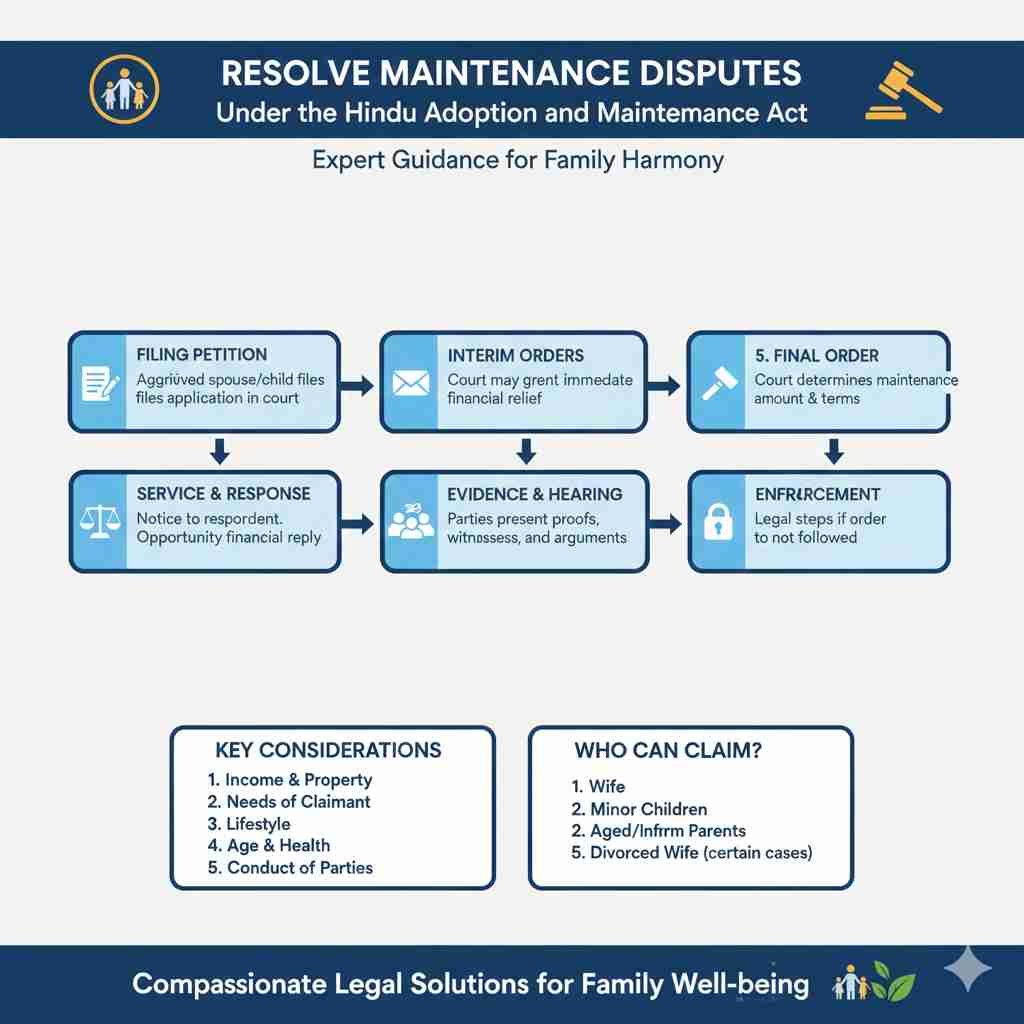
Who Can Claim Maintenance?
Under HAMA, several people have the legal right to claim maintenance, including:
1. Wife
A Hindu wife who is neglected or not provided for can claim maintenance. Even if she is living separately for valid reasons such as cruelty, desertion, or harassment, she is entitled to support.
2. Children
Both legitimate and illegitimate children can claim maintenance. This includes minors, unmarried daughters, and children who are physically or mentally unable to take care of themselves.
3. Aged or Dependent Parents
Parents who cannot maintain themselves have the right to claim maintenance from their children.
4. Widowed Daughter-in-law
If a woman loses her husband and cannot maintain herself, she can seek support from her father-in-law.
5. Dependents
Other relatives who rely on the family for financial support may also have rights under specific circumstances.
Because the scope is wide, maintenance disputes can involve multiple parties. That is why expert legal guidance becomes essential.
Common Causes of Maintenance Disputes
Even though the law is clear, maintenance disputes happen for several reasons.
1. Financial Disagreements
One party may argue that the demanded amount is too high, while the other believes it is too low.
2. Marital Conflicts
Issues such as cruelty, desertion, second marriage, and distrust often lead to disputes regarding responsibility.
3. Lack of Proof of Income
Many individuals hide or understate their income to avoid paying fair maintenance.
4. Neglect of Older Parents
Modern families sometimes overlook their duty towards aging parents, prompting legal battles for support.
5. Misunderstanding of Rights
Many people simply do not know that the law protects them. This lack of awareness leads to delays and complications.
Each of these disputes requires a calm, strategic, and legally strong approach—exactly what Legacy Family Court Law Firm provides.
How Courts Decide Maintenance
The court considers several factors when deciding how much maintenance should be paid.
1. Income and Financial Status
Courts assess the earning ability, property, lifestyle, and standard of living of both parties.
2. Needs of the Dependent Person
Expenses such as food, clothing, medical care, rent, and education are taken into account.
3. Conduct of the Parties
Cruelty, abandonment, and irresponsible behavior may influence the decision.
4. Number of Dependents
If the person responsible has multiple dependents, the amount may be adjusted.
5. Special Circumstances
Disability, illness, or urgent needs can increase the amount of maintenance.
The goal is always fairness. Courts aim to maintain the dependent’s dignity while ensuring the payer’s capacity is respected.
Our Role as Expert Family Court Lawyers
At Legacy Family Court Law Firm: Chennai Divorce Experts, we take a professional and supportive approach to maintenance disputes. Our goal is to resolve conflicts smoothly while protecting your legal rights.
Here’s how we assist clients:
1. Case Evaluation With Empathy
We begin by understanding your personal story, financial situation, and the hardship you are facing. Because every client’s experience is unique, we listen carefully before giving legal advice.
2. Gathering Evidence and Documents
To build a strong case, we collect all necessary documents such as:
- Salary slips
- Bank statements
- Medical reports
- Bills and expenses
- Proof of neglect
- Marriage certificates
- Identity documents
This evidence helps the court understand your position clearly.
3. Negotiation and Settlement Efforts
Whenever possible, we try to settle maintenance issues through peaceful negotiation. Settlements save time, reduce stress, and often satisfy both parties.
However, if negotiation fails, we proceed confidently to court.
4. Filing Petitions and Responses
Our team drafts strong petitions for maintenance or replies to defend against unfair claims. We use clear, firm, and legally accurate language that strengthens your case.
5. Representing You in Court
Our senior lawyers present your case professionally and persuasively. We highlight your needs, rights, and the legal duties owed to you.
6. Ensuring Fair Maintenance Orders
Our focus is always on achieving a result that supports your dignity, security, and long-term well-being.
Special Support for Women and Single Mothers
Women, especially mothers with young children, face extra challenges. Financial insecurity, emotional stress, and social pressure often weaken their ability to fight for justice.
At Legacy Family Court Law Firm, we:
- Protect the rights of women
- Secure child support and educational expenses
- Ensure fair maintenance for dependent wives
- Handle cases of cruelty, domestic violence, and abandonment
We stand with our clients throughout the process.
Support for Older Parents
Many older parents struggle financially because their children refuse to support them. Under the law, parents have the right to claim maintenance from their children.
We help older parents by:
- Filing maintenance petitions
- Proving financial hardship
- Securing monthly support
- Ensuring respectful treatment
Our family court lawyers handle these cases with sensitivity and determination.
Resolving Maintenance Issues After Divorce
Maintenance does not end with divorce. Under HAMA and other laws, a divorced woman may still claim:
- Monthly maintenance
- Lump sum alimony
- Child maintenance
We guide clients through these processes carefully, protecting their future and financial independence.
Why Choose Legacy Family Court Law Firm?
There are many reasons why clients trust our expertise:
1. Highly Experienced Senior Divorce and Family Lawyers
Our team has years of experience handling complex maintenance disputes.
2. Practical and Compassionate Approach
We balance legal strength with human understanding.
3. Strategic Case Planning
We prepare every case thoroughly, ensuring no detail is missed.
4. Transparent Communication
We explain the law in simple words and keep you updated at every step.
5. Strong Courtroom Representation
Our courtroom experience helps us secure favorable judgments for our clients.
Practical Tips for Anyone Facing Maintenance Disputes
Here are some useful suggestions to help you during a maintenance case:
- Keep all financial records
- Avoid emotional confrontations
- Maintain clear communication
- Follow court orders strictly
- Collect proof of expenses
- Seek legal help early
- Stay calm and patient
- Never hide income
These steps protect your rights and strengthen your case.
Frequently Asked Questions
Maintenance under the Hindu Adoption and Maintenance Act (HAMA) refers to the financial support that certain dependent family members can legally claim. This includes a wife, children, aging parents, and even a widowed daughter-in-law. The support covers basic needs such as food, clothing, education, medical care, and housing. The main purpose of maintenance is to ensure that no dependent person suffers due to neglect or lack of resources.
Yes, a Hindu wife can claim maintenance while living separately if she has valid reasons. These include cruelty, desertion, harassment, refusal to maintain her, or the husband having another relationship or second marriage. The court evaluates her circumstances carefully before granting maintenance.
Courts consider several factors such as the income and financial capacity of the person responsible, the dependent’s needs, health conditions, number of dependents, lifestyle, and any special circumstances like disability. The goal is to award a reasonable amount that maintains dignity without causing undue hardship to the payer.
Yes, older Hindu parents who cannot maintain themselves can legally claim maintenance from their children under HAMA. Sons and daughters both have equal responsibility. If the children refuse support, parents can file a petition and seek monthly financial assistance.
A family court lawyer helps by assessing your case, gathering proof of income and expenses, drafting strong petitions, negotiating settlements, and representing you in court. Skilled lawyers ensure fair maintenance orders, protect your legal rights, and simplify the entire process.
Conclusion: Your Trusted Partner in Maintenance Disputes
Maintenance disputes are not just legal battles—they are emotional journeys that involve dignity, responsibility, and survival. Whether you are a dependent wife, a struggling parent, a neglected child, or a widow seeking support, the law gives you protection. But navigating that law requires clarity, experience, and strong legal support.
At Legacy Family Court Law Firm: Chennai Divorce Experts, we stand by you with dedication, professionalism, and compassion. We help you understand your rights, present your case strongly, and secure the maintenance you truly deserve.
Read More
- Inheritance Rights for Christians Under the Indian Succession Act
- Legal Protection for Women Under Section 498A of the Indian Penal Code
- Get Justice for Dowry Death Under Section 304B IPC
- Fight Dowry Cases Under Section 304B of the Indian Penal Code
- Marriage Dissolution Guidance Under the Indian Divorce Act
- Department of Justice, Government of India – Family Court Section