


Parental Alienation in Custody Disputes – Child custody disputes are often emotionally intense. However, when one parent deliberately tries to distance a child from the other parent, the situation becomes far more serious. This behavior is commonly referred to as parental alienation. It not only affects the relationship between the child and the targeted parent but also harms the child’s emotional well-being in the long run.
In today’s family law landscape, courts are increasingly aware of such conduct. Therefore, it becomes essential for parents to understand what parental alienation is, how it manifests, and what legal remedies are available. In this article, we explain these aspects in simple terms while also guiding you on how to approach such situations effectively.
Parental Alienation in Custody Disputes – Legal Remedies Available – By Legacy Family Court Law Firm
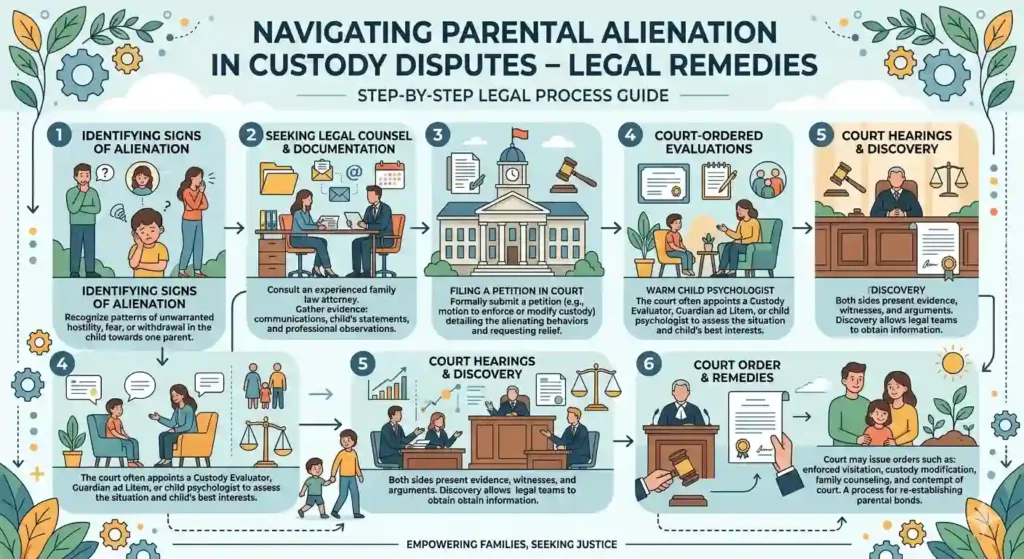
What Is Parental Alienation?
Parental alienation occurs when one parent influences a child to reject or fear the other parent without valid justification. Usually, this happens during or after separation or divorce. For example, one parent may repeatedly speak negatively about the other parent, restrict contact, or manipulate the child’s emotions.
Over time, the child may begin to believe these negative statements. As a result, the bond between the child and the alienated parent weakens. In many cases, the child may even refuse to meet or communicate with that parent.
Why Is Parental Alienation a Serious Concern?
At first glance, some may dismiss such behavior as part of a bitter dispute. However, the impact goes much deeper. Children need emotional support from both parents. When one parent is unfairly removed from their life, the child may experience confusion, anxiety, and emotional distress.
Moreover, parental alienation can have long-term psychological effects. It can affect the child’s ability to form healthy relationships in the future. Therefore, courts treat such behavior seriously and consider it while deciding custody matters.
Common Signs of Parental Alienation
Recognizing parental alienation early can make a significant difference. Although every case is different, certain patterns are commonly observed.
For instance, a child may suddenly show hostility toward one parent without clear reason. Additionally, the child may repeat negative statements that seem influenced by the other parent. In some situations, the child may refuse visitation or communication altogether.
Furthermore, the alienating parent may:
- Constantly criticize the other parent in front of the child
- Interfere with visitation schedules
- Create false narratives about the other parent
- Encourage the child to choose sides
These behaviors, especially when repeated, can indicate parental alienation.
Legal Position in India
In India, there is no specific law that uses the term “parental alienation.” However, courts recognize the concept while deciding custody and visitation disputes. The primary consideration in such cases is always the welfare of the child.
Family courts, as well as High Courts, have acknowledged that a child should have access to both parents unless there are genuine concerns about safety or well-being. Therefore, if one parent deliberately obstructs this relationship, courts may intervene.
How Courts View the Welfare of the Child
The principle of “best interest of the child” guides all custody decisions. This means courts look beyond the parents’ disputes and focus on what benefits the child.
For example, courts consider:
- Emotional and psychological needs of the child
- Stability and environment provided by each parent
- Willingness of each parent to support the child’s relationship with the other parent
Therefore, if one parent engages in alienating behavior, it may reflect negatively on their ability to act in the child’s best interest.
Legal Remedies Available
Fortunately, the law provides several remedies to address parental alienation. Although the process may vary depending on the case, the following options are commonly available.
1. Seeking Modification of Custody Orders
If parental alienation is affecting the child, the affected parent can approach the court to modify existing custody arrangements. For instance, the court may reconsider custody or change visitation schedules.
In serious cases, courts may even transfer custody to the alienated parent if it serves the child’s welfare.
2. Enforcement of Visitation Rights
Sometimes, one parent violates court-ordered visitation rights. In such cases, the affected parent can file an application for enforcement.
Courts can take strict action to ensure compliance. They may issue warnings, impose penalties, or pass further directions to protect the parent-child relationship.
3. Contempt of Court Proceedings
If a parent repeatedly disobeys court orders, contempt proceedings can be initiated. This step is particularly useful when there is clear and intentional violation.
Through this process, courts can hold the defaulting parent accountable and ensure that orders are followed.
4. Appointment of Child Counselors or Experts
In many cases, courts appoint child psychologists or counselors to understand the child’s perspective. These experts help identify whether the child’s behavior is influenced by alienation.
Moreover, counseling sessions can help rebuild the relationship between the child and the alienated parent.
5. Mediation and Family Counseling
Before taking strict legal action, courts often encourage mediation. This process allows both parents to resolve disputes amicably.
Mediation can be highly effective, especially when both parents are willing to cooperate. It focuses on reducing conflict and promoting the child’s well-being.
6. Supervised Visitation
In certain situations, courts may order supervised visitation. This means visits take place in a controlled environment under supervision.
This approach ensures that the child feels safe while also maintaining contact with both parents.
Role of Evidence in Proving Parental Alienation
To seek legal remedies, the affected parent must provide evidence. Therefore, it is important to maintain proper records.
Useful evidence may include:
- Messages or emails showing interference
- Records of denied visitation
- Witness statements
- Reports from counselors or experts
Such evidence helps the court understand the situation clearly and take appropriate action.
Challenges in Addressing Parental Alienation
Although legal remedies exist, proving parental alienation can be challenging. This is because the behavior is often subtle and develops over time.
Additionally, courts must balance multiple factors. They must ensure that the child’s voice is heard while also protecting them from manipulation.
Therefore, handling such cases requires careful strategy and legal expertise.
Preventive Steps for Parents
While legal remedies are important, prevention is always better. Parents should make conscious efforts to avoid actions that may harm the child.
For instance:
- Avoid speaking negatively about the other parent
- Encourage healthy communication between the child and both parents
- Follow court orders sincerely
- Focus on the child’s emotional needs
By adopting a cooperative approach, parents can reduce conflict and create a healthier environment.
How Legacy Family Court Law Firm Can Help
At Legacy Family Court Law Firm, we understand the emotional and legal complexities involved in custody disputes. Parental alienation cases require both sensitivity and strong legal strategy.
We assist clients by:
- Evaluating the situation and identifying signs of alienation
- Gathering and presenting evidence effectively
- Representing clients in custody and visitation matters
- Facilitating mediation and counseling processes
Most importantly, we focus on protecting the child’s best interests while safeguarding our clients’ rights.
Frequently Asked Questions
Parental alienation occurs when one parent intentionally influences a child to reject or fear the other parent without valid reason. This often happens during separation or divorce. For example, one parent may make negative remarks, restrict communication, or manipulate the child emotionally. As a result, the child’s bond with the other parent weakens over time, which can harm the child’s emotional well-being.
Indian courts do not have a specific law defining parental alienation, but they recognize its impact. Courts always prioritize the child’s welfare. Therefore, if one parent is found to be damaging the child’s relationship with the other parent, it may influence custody decisions. Judges often consider whether each parent encourages a healthy relationship between the child and the other parent.
An affected parent can approach the court for various remedies. These include enforcement of visitation rights, modification of custody orders, or even transfer of custody in serious cases. Additionally, courts may initiate contempt proceedings if orders are violated. Counseling and mediation are also commonly used to restore the parent-child relationship.
Evidence plays a crucial role in such cases. Parents can present messages, emails, or records showing denial of visitation. Witness statements and reports from child psychologists can also help. Proper documentation strengthens the case and helps the court understand the situation clearly.
Yes, it can often be prevented through responsible parenting. Parents should avoid speaking negatively about each other and must follow court orders. Encouraging open communication and focusing on the child’s emotional needs are essential. A cooperative approach helps reduce conflict and ensures the child maintains a healthy relationship with both parents.
Conclusion
Parental alienation is a serious issue that can deeply affect a child’s emotional development and family relationships. However, with the right legal approach, it is possible to address and resolve such situations.
Courts in India are increasingly recognizing the harmful effects of alienation and are willing to take appropriate action. Therefore, parents facing such challenges should act promptly and seek professional guidance.
Ultimately, every custody decision revolves around the child’s welfare. By prioritizing the child’s well-being and maintaining a balanced approach, parents can ensure a healthier future for their children.
Read More
- Child’s Preference in Custody Appeals – How Courts Evaluate
- International Child Custody Disputes – Supreme Court Jurisprudence
- Denial of Visitation Rights – Legal Remedies Before High Court
- Habeas Corpus in Child Custody Matters – When Is It Applicable?
- Welfare of Child vs Parental Rights – Supreme Court Approach
- Department of Justice – Family Courts (Government of India)